 Free shipping on orders over $75 across the U.S., with different free shipping promotions available in parts of
 Europe,
 South America,
 Australia.For all other countries, please contact us before placing your order, and we'll be happy to fast-track a shipping solution for you.
Pet Snake Care for Beginners: Are They Really Easy to Keep?
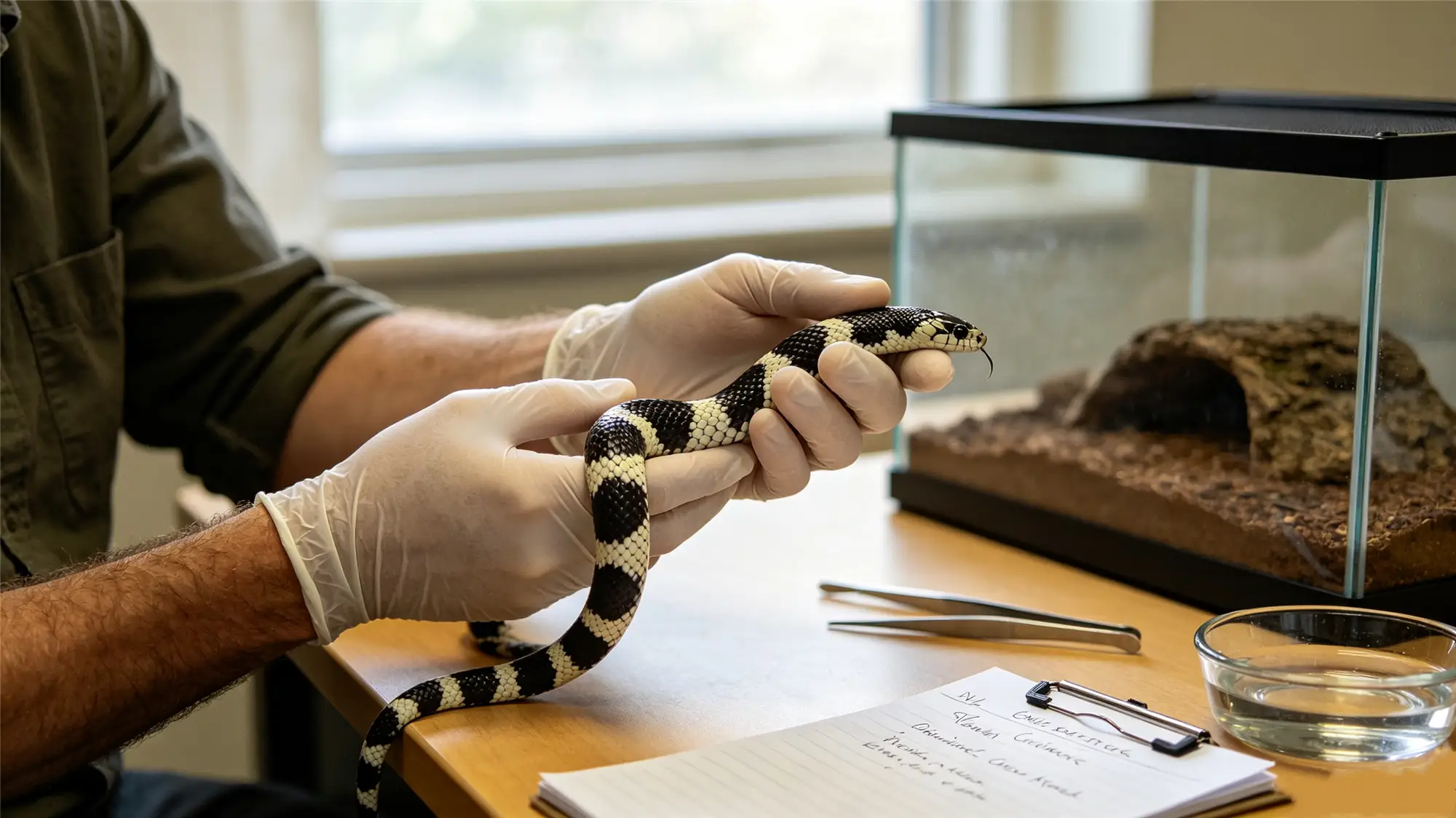
Thinking about getting a pet snake but wondering if they’re truly low-maintenance? You’re not alone. The idea that snakes are “living decorations” that require zero effort is a common misconception. While pet snake care is generally simpler than caring for a dog or cat, these fascinating reptiles have specific needs that demand attention to detail.
In this guide, we’ll break down exactly what beginner snake owners need to know—from enclosure setup to feeding routines—so you can decide if a slithery companion fits your lifestyle.
The Truth About Pet Snake Maintenance
Let’s address the elephant in the room: pet snakes are relatively easy to keep, but they’re not “set it and forget it” pets. Compared to furry companions, they don’t require daily walks, constant attention, or expensive grooming. However, they do need precise environmental control and species-specific care.
Why Snakes Fit Busy Lifestyles
- Infrequent feeding: Most adult snakes eat only once every 7-14 days
- No noise complaints: Perfect for apartment living—snakes don’t bark or meow
- Minimal space requirements: A proper 20-40 gallon enclosure often suffices for many popular species
- No allergy triggers: Ideal for people with fur allergies
The Hidden Complexity
Despite these advantages, snake keeping requires:
- Consistent temperature gradients (usually 75-85°F with a basking spot)
- Humidity monitoring (40-60% for most species)
- Secure, escape-proof enclosures—snakes are Houdini-level escape artists
- Long-term commitment (many species live 15-20 years)
Creating the Perfect Snake Habitat
Your snake’s enclosure is its entire world. Getting the setup right from day one prevents 90% of health issues down the line.
Enclosure Essentials
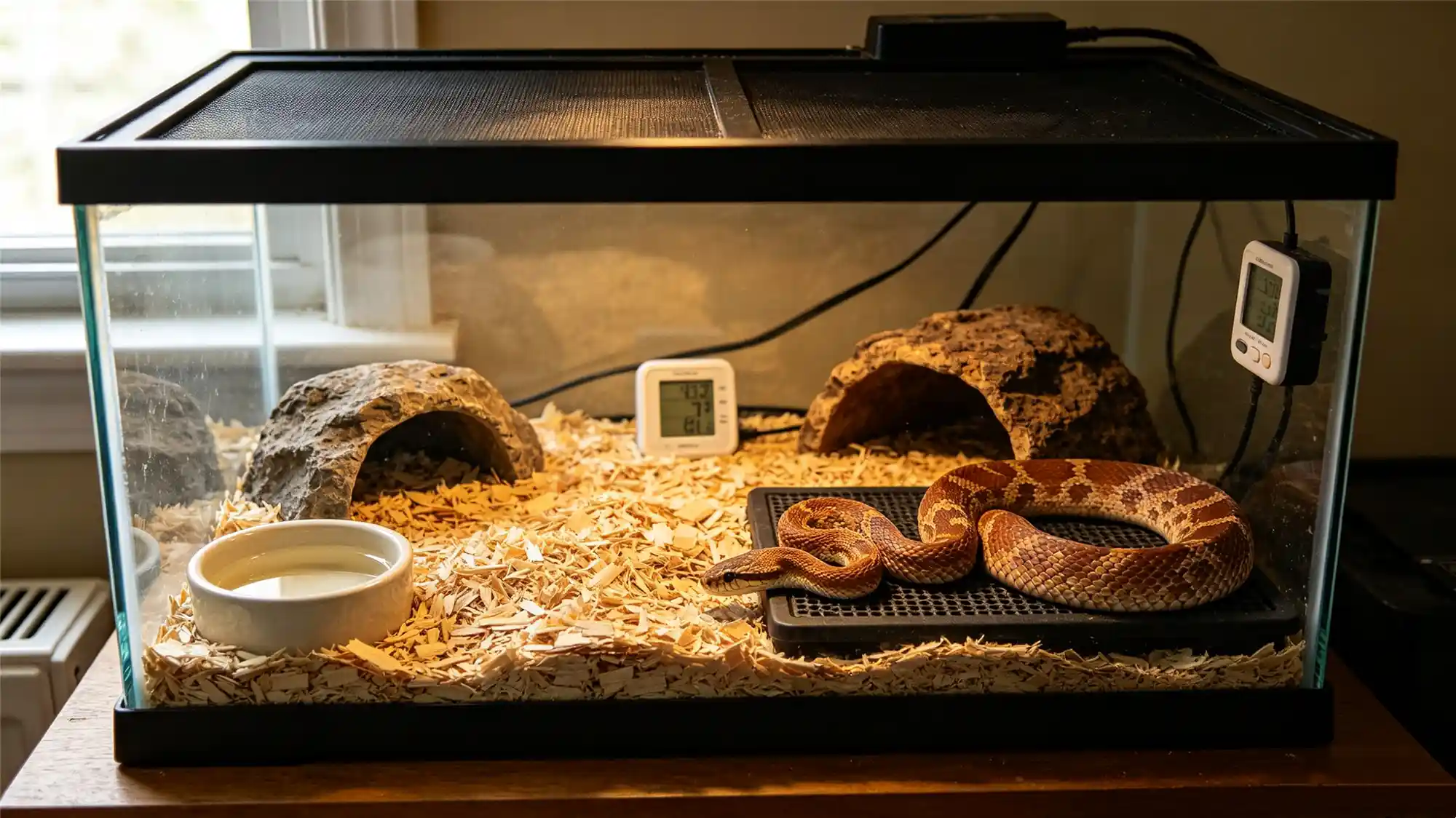
For beginner-friendly species like corn snakes or king snakes, a 20-40 gallon glass terrarium with a secure mesh lid works perfectly. Key elements include:
- Two hide boxes: One on the warm side, one on the cool side
- Water dish: Large enough for soaking, heavy enough to prevent tipping
- Substrate: Aspen shavings or reptile-safe bedding (avoid cedar or pine)
- Climbing branches: Especially important for active species like corn snakes
Essential Supplies for Keeping Reptiles
Temperature and Humidity Control
Snakes are ectothermic—they rely on external heat sources. Invest in a quality under-tank heater or heat mat paired with a thermostat. Never use heat rocks; they can cause severe burns.
Monitor conditions with digital hygrometers, not dial gauges which are often inaccurate. Maintaining proper humidity prevents shedding issues and respiratory infections.
Best Pet Snakes for Beginners
Not all snakes are created equal when it comes to ease of care. These three species dominate the beginner market for good reason:
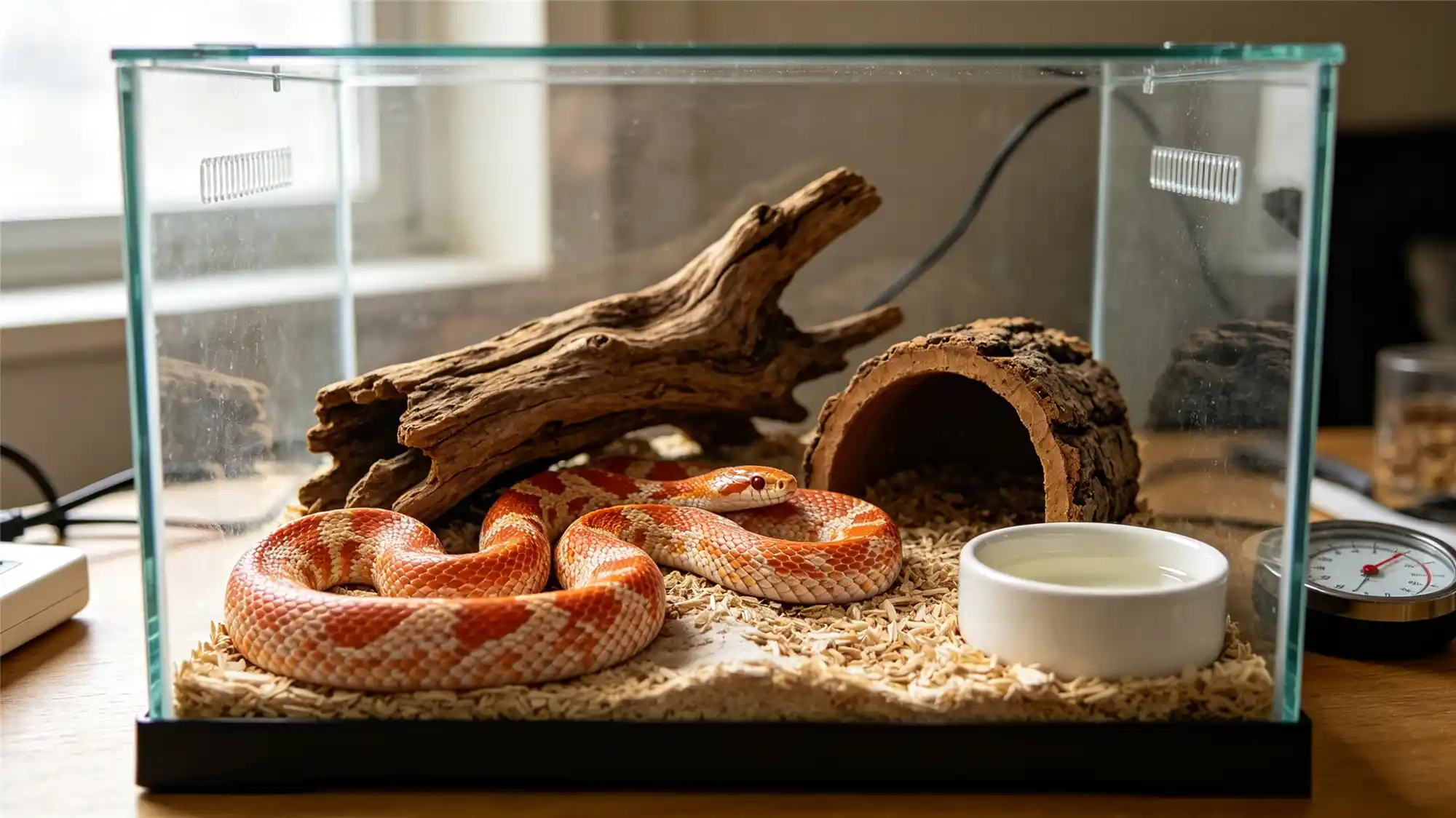
Corn Snakes (Pantherophis guttatus)
The undisputed champion of beginner snakes. Corn snakes are:
- Docile and rarely bite
- Available in stunning color morphs (albino, lavender, snow)
- Active during the day, providing plenty of viewing opportunities
- Manageable size: 4-5 feet as adults
King Snakes and Milk Snakes (Lampropeltis species)
Known for their bold banding patterns, these snakes are:
- Hardy and resistant to disease
- Slightly more food-motivated than corn snakes (handle with care during feeding time)
- Moderate size: 3-4 feet typically
Ball Pythons (Python regius)
While incredibly popular, ball pythons are slightly more challenging due to humidity requirements and occasional feeding strikes. They’re best for beginners willing to do extra research.
Feeding Your Pet Snake: What to Expect
This is where many potential owners hesitate. Yes, snakes eat rodents—but modern reptile keeping has made this easier than ever.
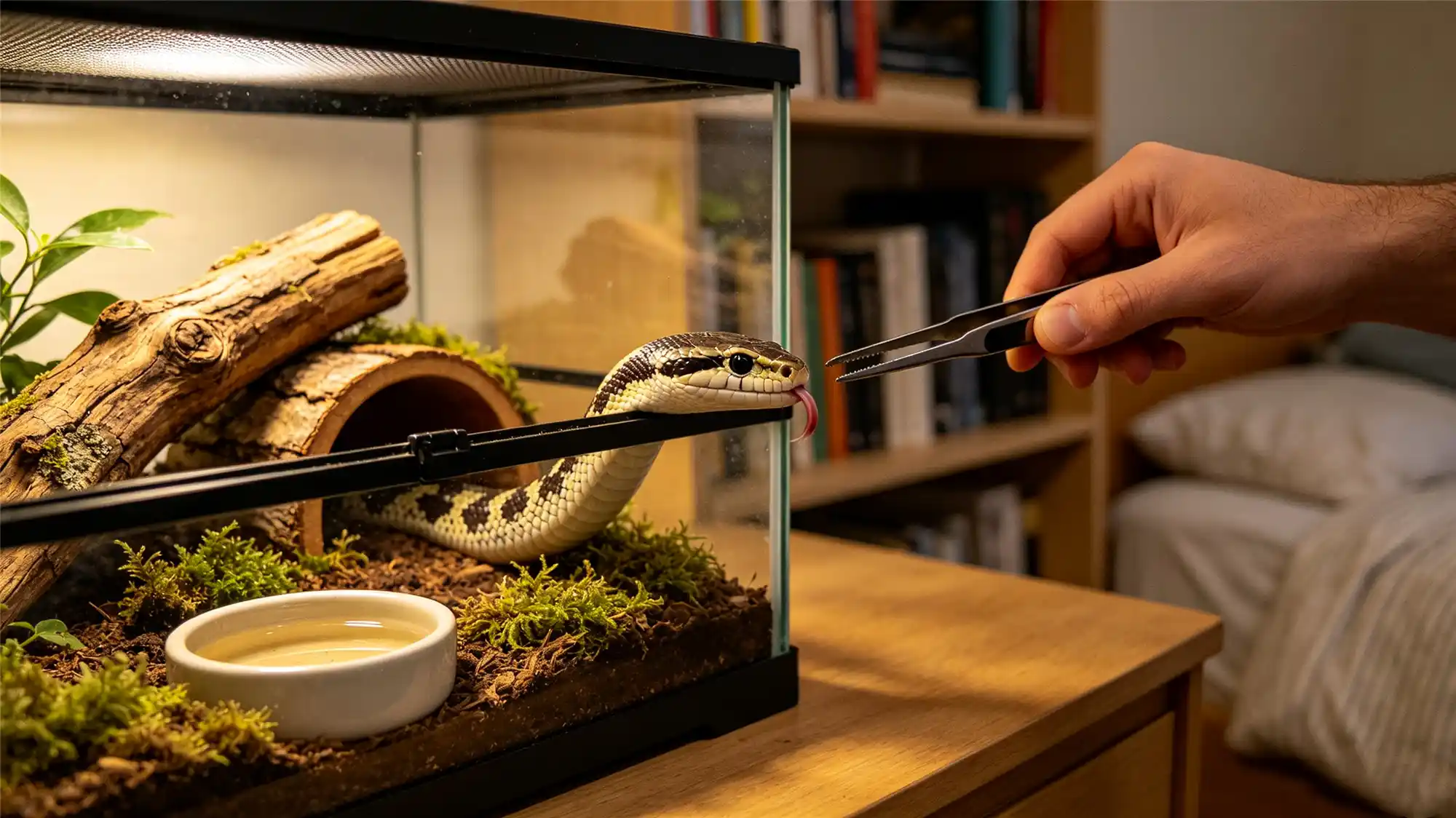
Frozen-thawed rodents are the gold standard. They’re safer for your snake (no risk of bites from live prey), more humane, and can be stored in your freezer. Never feed wild-caught prey—they carry parasites.
Feeding Schedule
- Hatchlings: Every 5-7 days
- Juveniles: Every 7-10 days
- Adults: Every 10-14 days (some larger species every 2-3 weeks)
Always use long feeding tongs to avoid accidental bites, and feed in a separate container if your snake is prone to ingesting substrate.
Building Trust: Handling Your Snake
Regular, gentle handling is essential for maintaining a tame snake. However, timing matters:
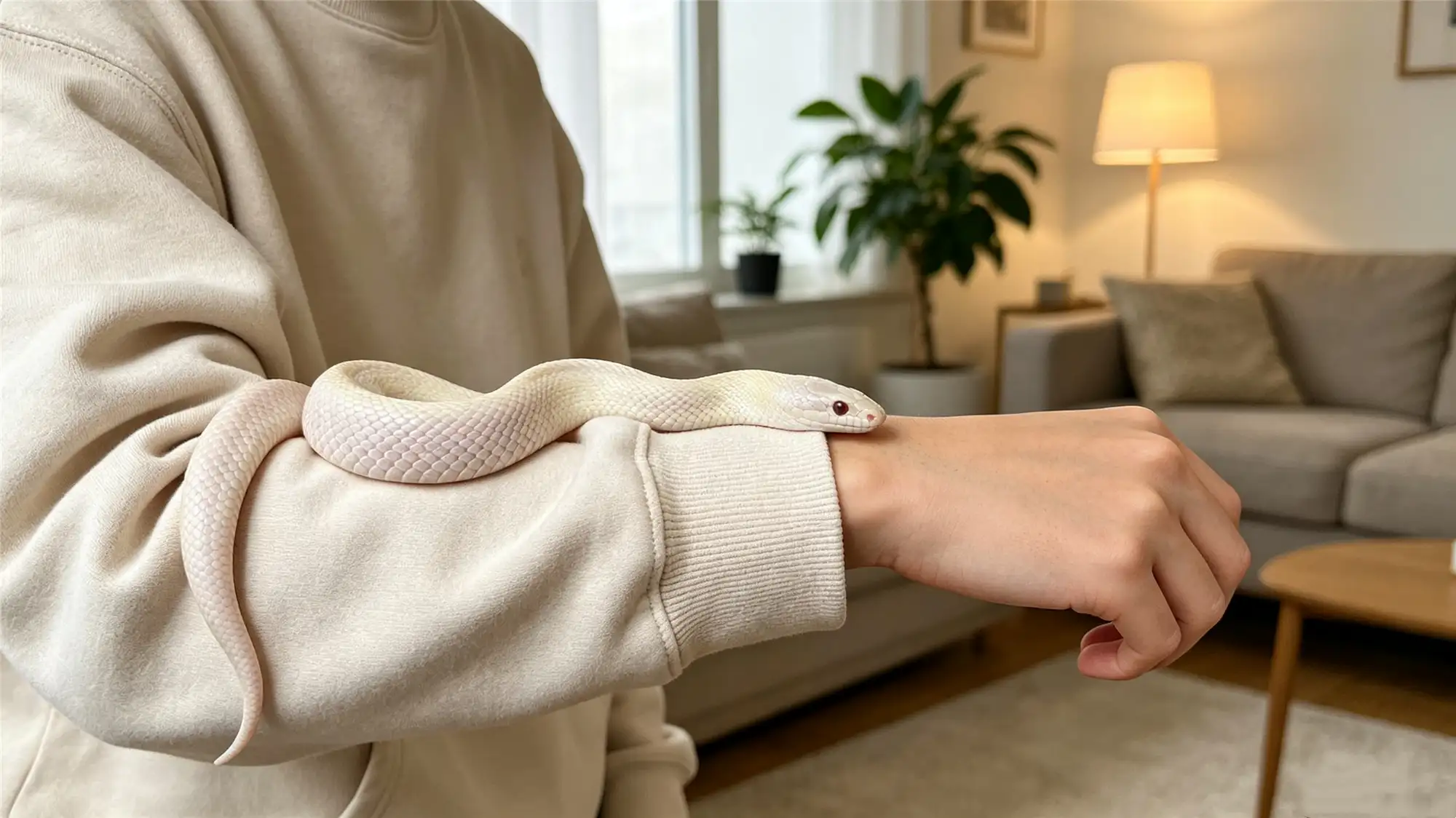
- Wait 48 hours after feeding—handling too soon can cause regurgitation
- Avoid handling during shedding—their vision is impaired and they’re more defensive
- Support the body fully: Use both hands and let the snake move through your fingers
- Start with 10-15 minute sessions and gradually increase duration
Most snakes calm down significantly with regular interaction. King snakes and corn snakes typically become puppy-dog tame within a few months of consistent handling.
Common Beginner Mistakes to Avoid
Even “easy” snakes suffer when these basics are ignored:
- Inadequate enclosure security: A determined snake can push through loose lids. Use locking clips.
- Impaction risks: Avoid loose substrates like sand or walnut shells for young snakes
- Skipping the thermostat: Unregulated heat mats can reach 120°F+ and burn your pet
- Ignoring shedding signs: Cloudy eyes and dull skin mean humidity needs to increase immediately
Final Verdict: Is a Pet Snake Right for You?
Pet snakes are easy to keep—if you’re detail-oriented and willing to learn. They won’t cuddle on the couch like a cat, but they offer a unique window into reptile behavior that’s deeply rewarding.
If you can commit to weekly feeding, monthly enclosure deep-cleaning, and daily spot checks of temperature and humidity, a corn snake or king snake makes an excellent first reptile. Just remember: “low maintenance” doesn’t mean “no maintenance.”
Ready to start your reptile journey? Research reputable breeders in your area, and always verify that your local laws permit snake keeping. With the right setup and knowledge, you’ll enjoy 15+ years with one of nature’s most misunderstood creatures.