 Free shipping on orders over $75 across the U.S., with different free shipping promotions available in parts of
 Europe,
 South America,
 Australia.For all other countries, please contact us before placing your order, and we'll be happy to fast-track a shipping solution for you.
How to Train Your Dog to Walk Calmly on a Leash Without Pulling: A Step-by-Step Guide
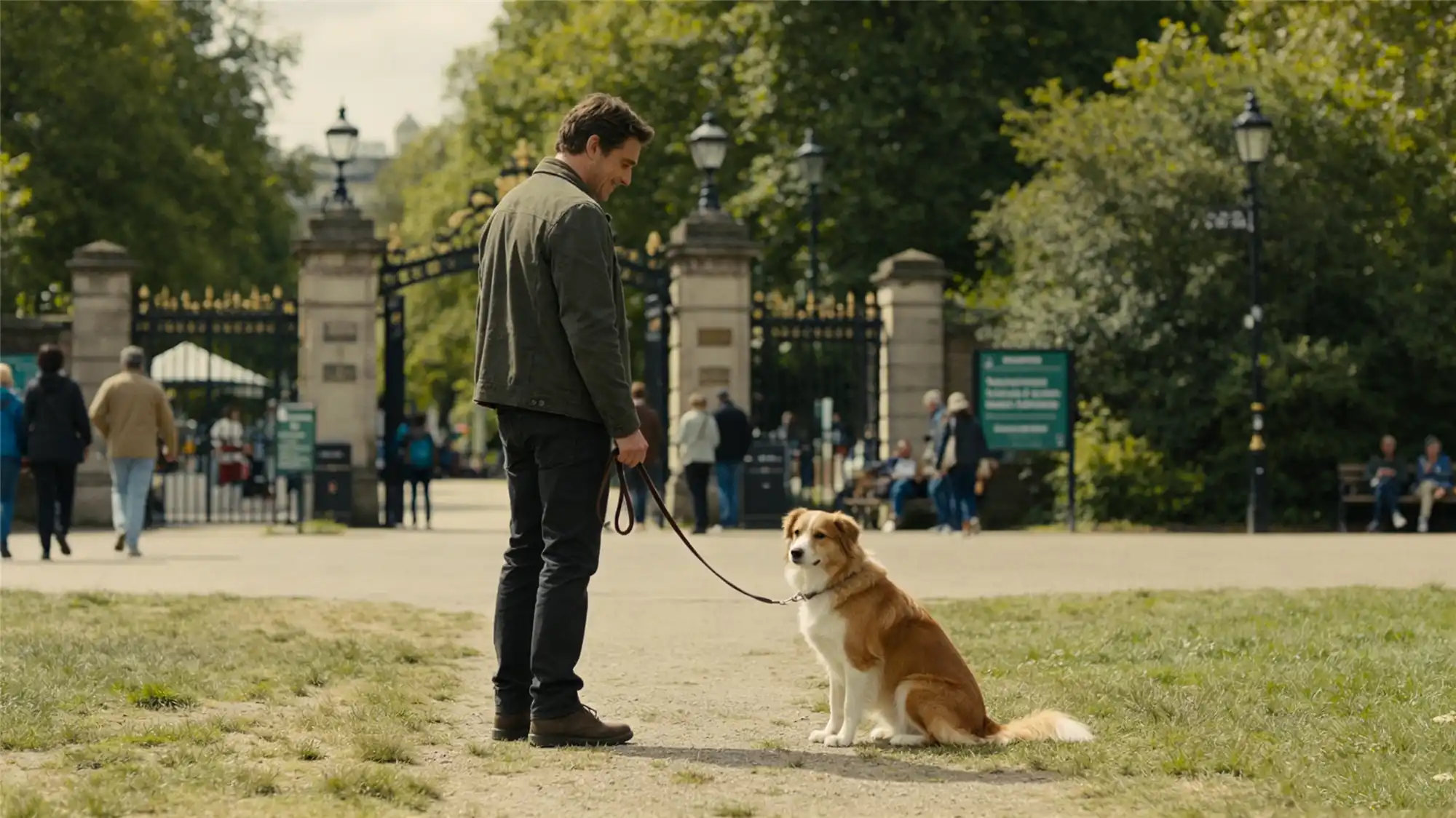
Does your daily walk feel more like an arm-wrestling match than a relaxing stroll? If you’re tired of being dragged down the sidewalk while your dog lunges after every squirrel, you’re not alone. Leash pulling is one of the most common behavioral challenges dog owners face—but it’s also one of the most fixable.
In this guide, we’ll break down proven, force-free methods to teach your dog loose-leash walking. Whether you have a muscular Labrador or an excitable terrier, these techniques will transform your walks from stressful battles into enjoyable bonding time.
Why Do Dogs Pull on the Leash?
Before fixing the behavior, you need to understand the motivation. Dogs don’t pull to dominate you—they pull because it works. The physics are simple: when your dog pulls forward and you follow, they learn that pulling equals progress.
Key triggers include:
- Prey drive: Squirrels, birds, and moving objects activate chasing instincts
- Exploration: The world is full of fascinating smells and sounds
- Energy overflow: Pent-up energy makes calm walking nearly impossible
- Improper equipment: Retractable leashes actually teach dogs to pull
Essential Gear for Leash Training Success
The right equipment sets you up for success before you even start training. Ditch the retractable leash and opt for a standard 4-6 foot leash that gives you control without encouraging pulling.Choose the right leash
Harness vs. Collar: For heavy pullers, a front-clip harness is a game-changer. Unlike back-clip harnesses (which encourage sled-dog pulling), front-clip designs gently turn your dog toward you when they lunge, naturally discouraging pulling without choking.
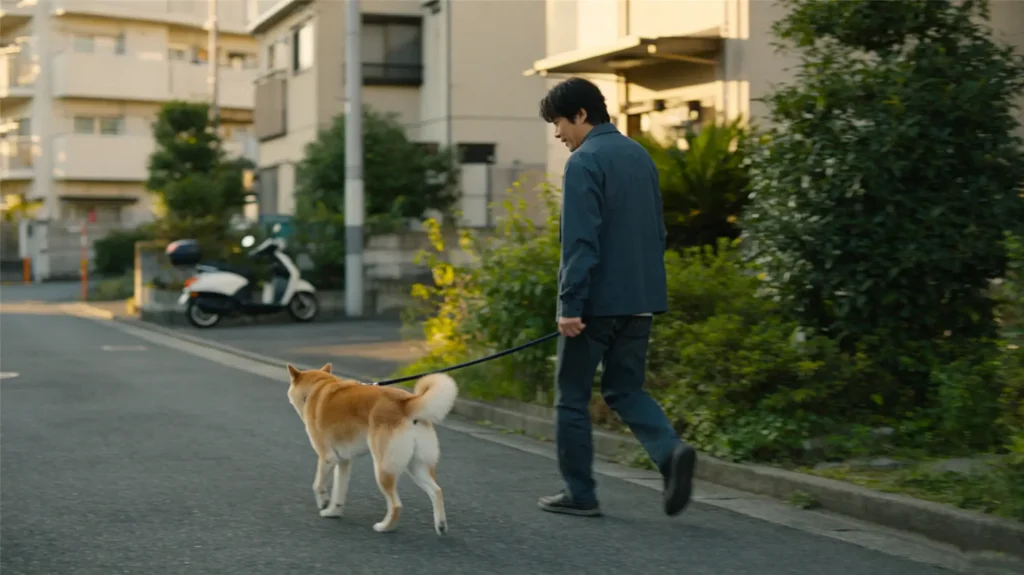
The “Be a Tree” Method
This is the foundation of loose-leash training. The concept is simple: when the leash goes tight, you stop moving. Completely.
How to Practice:
- Start walking with your dog on your left side (or right—consistency matters more than side)
- The moment you feel tension on the leash, plant your feet like a tree
- Wait silently until your dog releases tension by either stepping back or turning toward you
- The instant the leash loosens, mark the behavior with “Yes!” or a clicker, then continue walking
Your dog will quickly learn that pulling stops the fun, while a loose leash keeps the walk moving. Patience is crucial here—your first few walks might take 20 minutes just to get down the block.
The Reverse Direction Technique
When “Be a Tree” isn’t enough, add the penalty yards method. The moment your dog pulls ahead, pivot 180 degrees and walk the opposite direction.
This technique works because it:
- Immediately removes access to the distraction they were pulling toward
- Requires them to pay attention to your movement to avoid tripping
- Creates a clear consequence: pulling = moving away from the goal
Be unpredictable with your turns. Random lefts, rights, and about-turns teach your dog that they must watch you to know where you’re going.
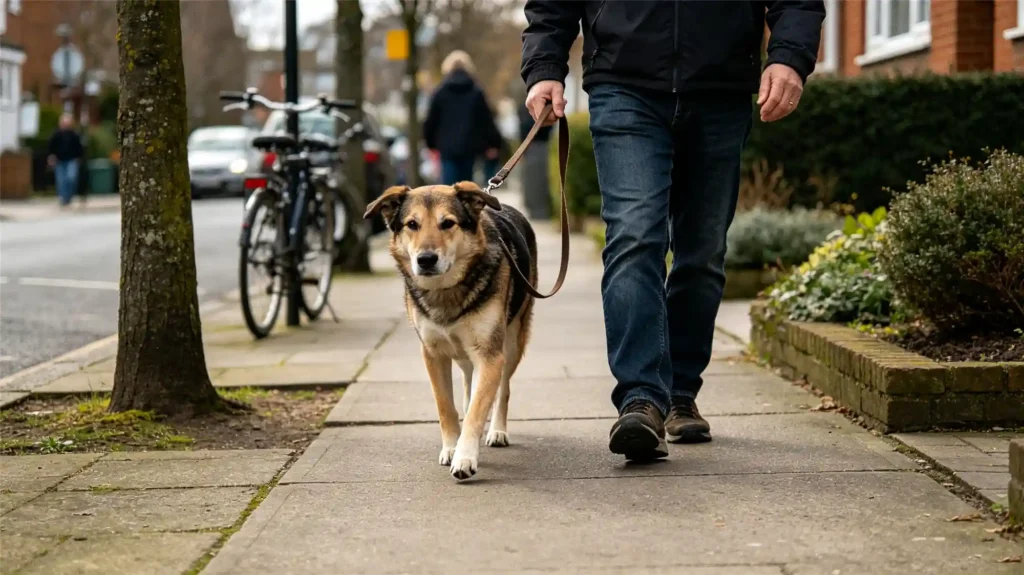
Training in Progressive Stages
Don’t expect your dog to master loose-leash walking on a busy city street on day one. Training requires gradual difficulty increases.
Stage 1: The Backyard (Low Distraction)
Practice in your yard or living room where there are few distractions. Reward every 2-3 steps of loose-leash walking with high-value treats. This builds the muscle memory for the correct position.
Stage 2: Quiet Residential Streets
Once your dog succeeds in low-distraction areas, move to quiet neighborhoods. Here you’ll encounter mild distractions like grass smells and distant sounds. Use the “Be a Tree” method consistently.
Stage 3: Urban Challenges
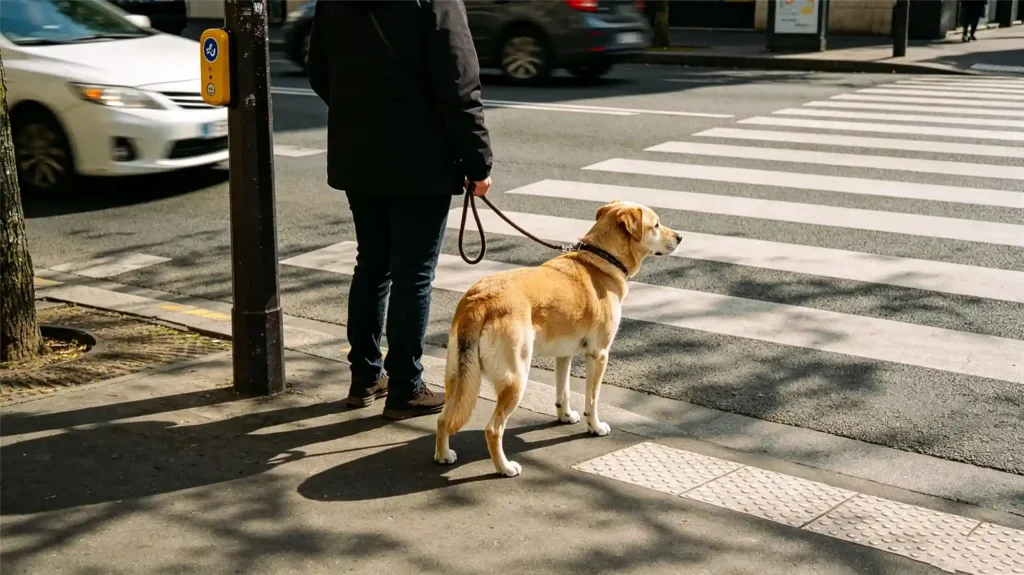
Only attempt busy sidewalks, crosswalks, and areas with other dogs after mastering Stage 2. City environments test your dog’s impulse control to the maximum.
High-Value Rewards and Timing
Your dog’s kibble won’t cut it when competing against the smell of rabbit trails. Use cut-up hot dogs, cheese, or freeze-dried liver—something your dog only gets during leash training.
Key timing tip: Reward while your dog is walking beside you, not after they stop. You want to reinforce the motion of walking calmly, not the pause. Keep treats in a bait bag or left pocket for easy access.
Managing Real-World Triggers
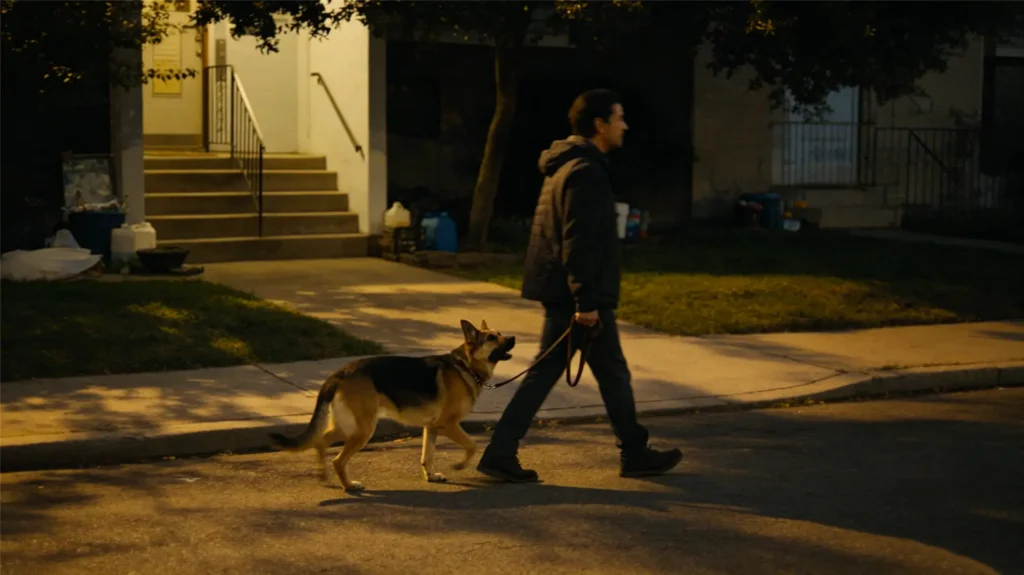
Even well-trained dogs have moments. When you see a trigger approaching (another dog, a jogger, a cat), create distance immediately.
Use the “Look at Me” cue:
- When you spot a distraction before your dog does, say their name or “Look!”
- Mark and reward the moment they make eye contact
- Continue rewarding as you pass the distraction
- If they start pulling, increase distance from the trigger
Common Mistakes to Avoid
Many owners accidentally sabotage their training. Avoid these pitfalls:
- Inconsistency: If you let pulling slide “just this once” because you’re in a hurry, you’re training your dog that pulling sometimes works
- Leash corrections: Jerking the leash creates opposition reflex (dogs naturally pull against pressure) and damages trust
- Walking too far: Short, successful sessions beat long, frustrating ones. End on a positive note after 10-15 minutes
- Using the wrong equipment: Prong and choke collars may suppress pulling but don’t teach the desired behavior and can cause injury
When to Seek Professional Help
If your dog exhibits extreme reactivity—barking, lunging, or growling at triggers—this goes beyond basic leash manners. Consult a certified positive-reinforcement trainer who specializes in reactivity. These behaviors require specialized desensitization protocols beyond standard loose-leash walking.
Consistency is Key
Transforming a puller into a polite walking partner doesn’t happen overnight. Most dogs require 2-4 weeks of consistent daily practice to develop new habits, and months to make them bulletproof.
Remember: every walk is a training opportunity. By staying patient, using the right equipment, and rewarding the behavior you want to see, you’ll soon enjoy peaceful walks where both you and your dog return home relaxed, not stressed.
Start today. Your shoulders will thank you tomorrow.