Free shipping on orders over $75 across the U.S., with different free shipping promotions available in parts of
 Europe,
 South America,
 Australia.For all other countries, please contact us before placing your order, and we'll be happy to fast-track a shipping solution for you.
Bearded Dragon Vegetable Guide Safe Foods, Toxic Foods & Daily Feeding Schedule
If you’ve ever stood in the grocery store produce aisle wondering, “Can my bearded dragon eat this?” — you’re not alone. Every reptile owner faces this dilemma.
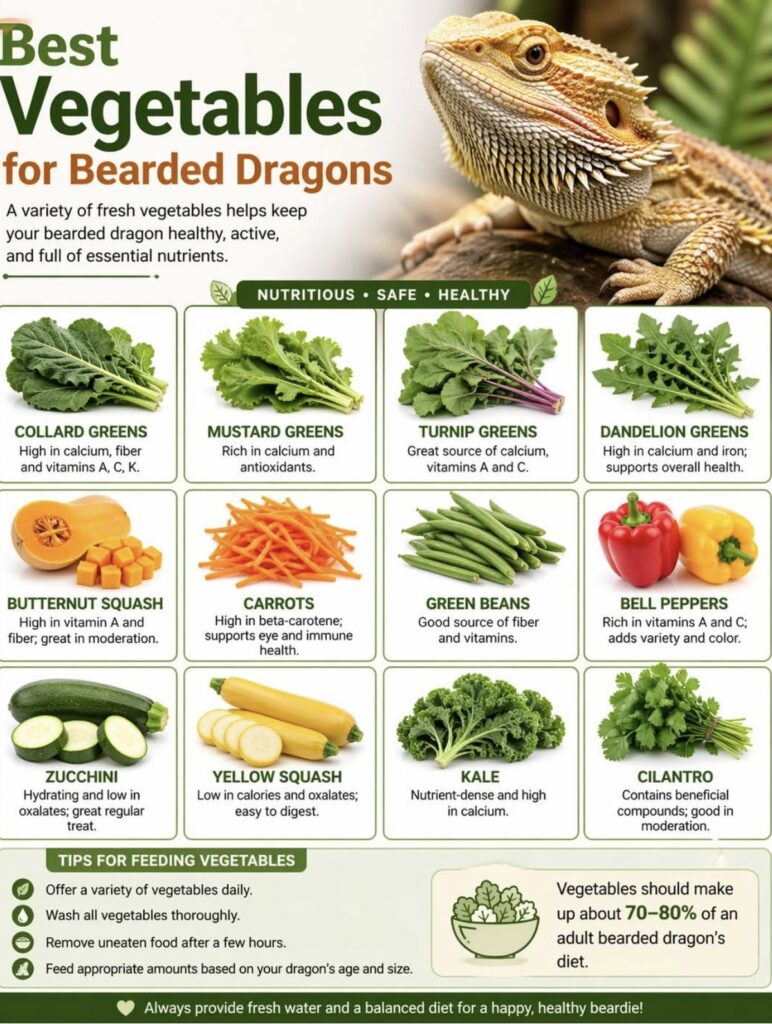
The truth is, vegetables should make up 70–80% of your adult bearded dragon’s diet. But not all greens are created equal. Some are nutritional powerhouses that prevent disease, while others can actually harm your scaly friend.
This guide cuts through the confusion. You’ll learn exactly which vegetables are safe, which to avoid, and how to build the perfect salad bowl for your bearded dragon.
Why Your Bearded Dragon Needs Vegetables
Bearded dragons are omnivores, but their nutritional needs change dramatically with age:
| Age Stage | Vegetables | Insects | Why |
|---|---|---|---|
| Babies (0–3 months) | 20% | 80% | Rapid growth requires protein |
| Juveniles (3–12 months) | 50% | 50% | Balanced development |
| Adults (12+ months) | 70–80% | 20–30% | Prevents obesity and MBD |
Metabolic Bone Disease (MBD) is the #1 health problem in captive bearded dragons. It’s caused by calcium deficiency — exactly what a good vegetable diet prevents.
The 4 Essential Nutrients in Vegetables
| Nutrient | Health Benefit | Best Vegetable Sources |
|---|---|---|
| Calcium | Strong bones, prevents MBD | Collard greens, mustard greens, turnip greens |
| Vitamin A | Eye health, strong immune system | Butternut squash, carrots, bell peppers |
| Fiber | Healthy digestion, prevents impaction | Green beans, squash, leafy greens |
| Water | Kidney health, prevents dehydration | Zucchini, cucumber, bell peppers |
Key Insight: The best vegetables combine multiple nutrients. Collard greens, for example, deliver calcium, fiber, and vitamins all in one leaf.
The Complete Vegetable Chart
✅ GREEN ZONE: Daily Staples
Feed these every day — they should make up 60–70% of the salad.
| Vegetable | Nutrition Highlights | Serving Tip |
|---|---|---|
| Collard Greens | High calcium, low oxalates, rich in vitamins A, C, K | The absolute gold standard — use as base |
| Mustard Greens | Calcium + antioxidants | Peppery flavor entices picky eaters |
| Turnip Greens | Calcium, vitamins A and C | Stems provide natural teeth-wearing crunch |
| Dandelion Greens | High calcium and iron | Buy organic — avoid sprayed greens |
| Endive | Good calcium-to-phosphorus ratio | Mild flavor, easy to mix in |
| Escarole | Similar to endive, nutrient-dense | Great rotation option |
🟡 YELLOW ZONE: Weekly Rotations
Feed 2–3 times per week for variety and beta-carotene.
| Vegetable | Nutrition Highlights | Serving Tip |
|---|---|---|
| Butternut Squash | High vitamin A, calorie-dense | Great for underweight dragons |
| Acorn Squash | Similar to butternut | Rotate between squash varieties |
| Yellow Squash | Hydrating, low oxalates | Serve raw or lightly steamed |
| Zucchini | Excellent hydration | Perfect for dragons who don’t drink water |
| Carrots | Beta-carotene for eye health | Shred or julienne — avoid large chunks |
| Bell Peppers | Vitamin C boost | Red and yellow are highest in nutrients |
| Green Beans | Good fiber source | Steam slightly for older dragons |
🟠 ORANGE ZONE: Occasional Additions
Feed weekly, not daily — use as flavor variety.
| Vegetable | Caution | How to Serve |
|---|---|---|
| Kale | High in goitrogens (affects thyroid) | Feed weekly, not daily |
| Cilantro | Strong flavor | Mix small amounts into salads |
| Parsley | High in oxalates | Use sparingly as garnish |
| Asparagus | Low nutritional value | Occasional treat only |
❌ RED ZONE: Never Feed These
These vegetables are dangerous and should never appear in your bearded dragon’s bowl:
| Vegetable | Why It’s Toxic |
|---|---|
| Spinach | Extremely high in oxalates — binds calcium, causes MBD |
| Beet Greens | Same issue as spinach — high oxalates |
| Swiss Chard | High oxalates, calcium blocker |
| Avocado | Contains persin — causes heart failure in reptiles |
| Rhubarb | Oxalic acid crystals — damages kidneys |
| Onions | Causes digestive upset and anemia |
| Garlic | Same as onions — toxic to reptiles |
| Iceberg Lettuce | Nutritionally empty — no benefit |
| Celery | Mostly water, tough to digest |
| Mushrooms | Hard to digest, potential toxins |
Remember: “Leafy green” does NOT automatically mean “safe.” Spinach and beet greens look healthy but are dangerous for bearded dragons.
How to Prepare Vegetables Safely
Proper preparation is just as important as choosing the right vegetables:
Step 1: Wash Thoroughly
- Rinse under running water for 30 seconds
- Use a vegetable brush for firm produce
- Organic is always best for reptiles
Step 2: Chop to Size
- Pieces should be no larger than the space between your dragon’s eyes
- This prevents choking and makes eating easier
- Shred carrots and hard vegetables
Step 3: Serve Raw
- Cooking destroys vitamin C and other heat-sensitive nutrients
- The only exception: very hard vegetables like butternut squash (light steam)
- Cut away seeds and tough skins
Step 4: Dust with Calcium
- Even calcium-rich greens need a boost
- Use reptile calcium powder without D3 3–4 times per week
- Light coating only — don’t overdo it
The Perfect Salad Formula
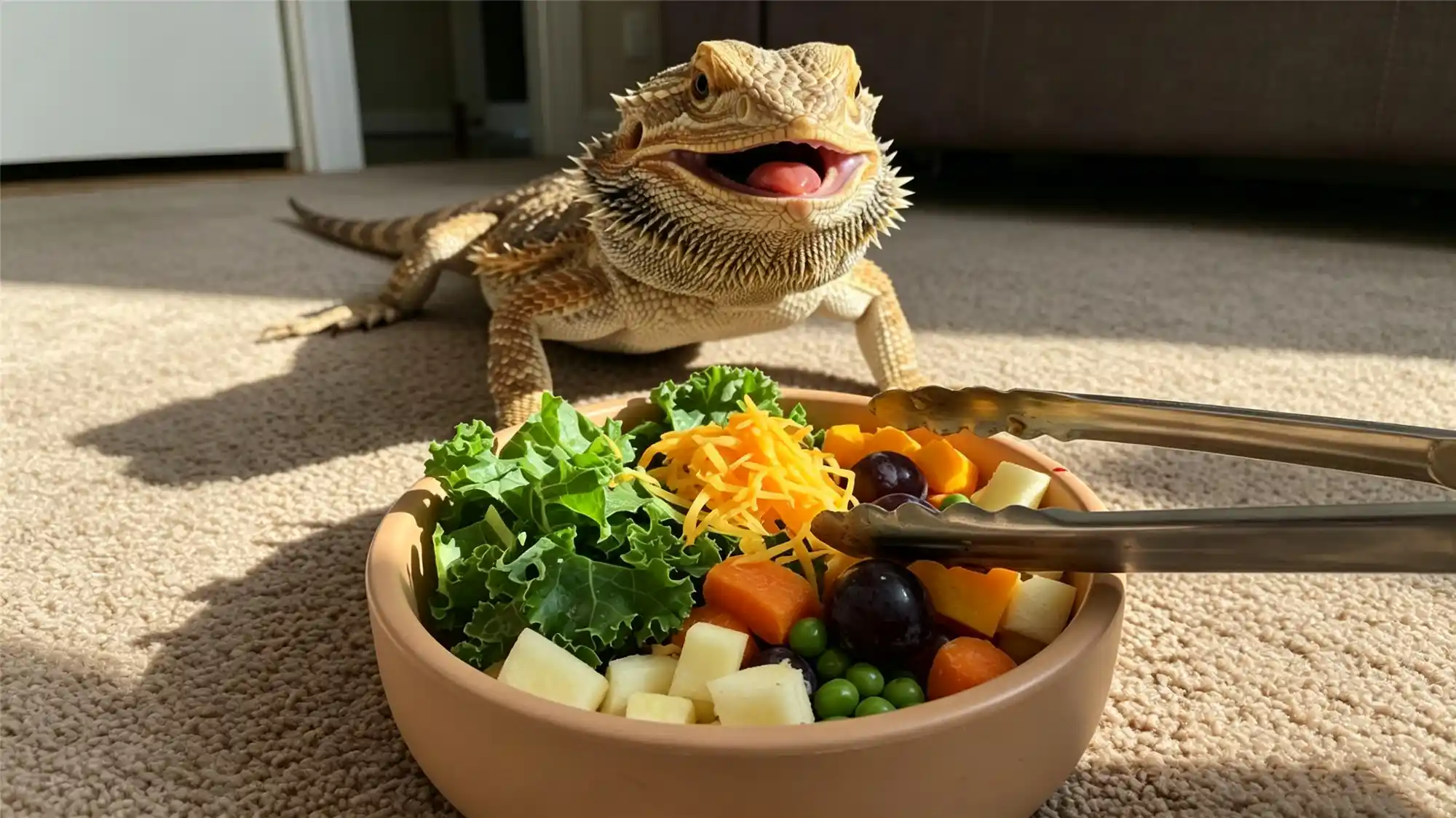
Build your bearded dragon’s daily salad using this simple 3-part formula:
| Component | Percentage | What to Use |
|---|---|---|
| Base Greens | 60% | Collard greens, mustard greens, or turnip greens |
| Color Vegetables | 30% | Butternut squash, bell peppers, or carrots |
| Flavor Topper | 10% | Cilantro or a sprinkle of bee pollen |
💧 Pro Tip: Mist the salad lightly with water before serving. This boosts hydration and makes the greens more appealing.
Portion Guide by Age
| Age | Salad Amount | Frequency | Feeding Time |
|---|---|---|---|
| Babies (0–3 months) | Small handful | Once daily | Morning |
| Juveniles (3–12 months) | Medium bowl | Once daily | Morning |
| Adults (12+ months) | Amount equal to head size | Once daily | Morning or early afternoon |
⏰ Remove uneaten food after 3–4 hours to prevent bacterial growth and rotting in the enclosure.
Common Feeding Mistakes to Avoid
- Feeding the Same Vegetables Daily
- Even safe greens vary in nutrients
- Rotate at least 3 different types each week
- Skipping Calcium Dusting
- Calcium deficiency is invisible until MBD develops
- Dust consistently — it’s one of the most important things you can do
- Overfeeding Fruit
- Fruit is high in sugar and should be an occasional treat only
- Stick to vegetables for daily meals
- Ignoring Water Intake
- Many dragons don’t drink from bowls
- Water-rich vegetables like zucchini and squash help prevent dehydration
- Leaving Food in the Tank Too Long
- Vegetables wilt and become breeding grounds for bacteria
- Always remove after 3–4 hours
Weekly Feeding Schedule Example
| Day | Base Green | Color Vegetable | Topper |
|---|---|---|---|
| Monday | Collard greens | Butternut squash | Cilantro |
| Tuesday | Mustard greens | Bell peppers | — |
| Wednesday | Turnip greens | Zucchini | Bee pollen |
| Thursday | Collard greens | Carrots | Cilantro |
| Friday | Dandelion greens | Yellow squash | — |
| Saturday | Mustard greens | Bell peppers | Bee pollen |
| Sunday | Rest day (smaller portion) | — | — |
Signs of a Healthy Diet
Your bearded dragon’s appearance and behavior will tell you if the diet is working:
| Healthy Sign | What to Look For |
|---|---|
| Weight | Steady, not gaining or losing rapidly |
| Energy | Alert, active, and curious during waking hours |
| Skin | Smooth shedding, no discoloration |
| Bones | Strong limbs, no swelling or bending |
| Appetite | Eats salad regularly |
⚠️ Warning Signs: Lethargy, constipation, swollen limbs, or refusal to eat vegetables may indicate dietary problems. Consult a reptile vet.
When to See a Vet
Seek professional help if you notice:
- Refusal to eat vegetables for more than 3 days
- Weight loss despite eating
- Swollen or bent limbs — could be MBD
- Lethargy or lack of movement
- Constipation or straining to defecate
Quick Reference Card
✅ Safe Daily Greens
- Collard greens
- Mustard greens
- Turnip greens
- Dandelion greens
- Endive / Escarole
✅ Safe Weekly Veggies
- Butternut squash
- Yellow squash
- Zucchini
- Carrots
- Bell peppers
- Green beans
❌ Never Feed
- Spinach
- Beet greens
- Swiss chard
- Avocado
- Rhubarb
- Onions / Garlic
- Iceberg lettuce
Final Thoughts
Feeding your bearded dragon well doesn’t have to be complicated.
The secret is simple:
- Start with calcium-rich leafy greens (collard, mustard, or turnip)
- Add color with squash, peppers, or carrots
- Dust with calcium powder
- Rotate vegetables weekly
- Remove uneaten food within 4 hours
That’s it. No complex recipes. No expensive supplements (beyond calcium powder). Just fresh, varied vegetables served consistently.
Your bearded dragon will thank you with years of health, energy, and that signature scaly smile.
Your Daily Checklist
- Washed all vegetables thoroughly
- Chopped to appropriate size
- Included at least 3 different vegetables
- Dusted with calcium powder
- Removed old food from enclosure
- Provided fresh water
Keep your bearded dragon healthy — one meal at a time. 🦎