 Free shipping on orders over $75 across the U.S., with different free shipping promotions available in parts of
 Europe,
 South America,
 Australia.For all other countries, please contact us before placing your order, and we'll be happy to fast-track a shipping solution for you.
How to Feed a 1-2 Month Old Puppy: The Complete Vet-Approved Nutrition Guide
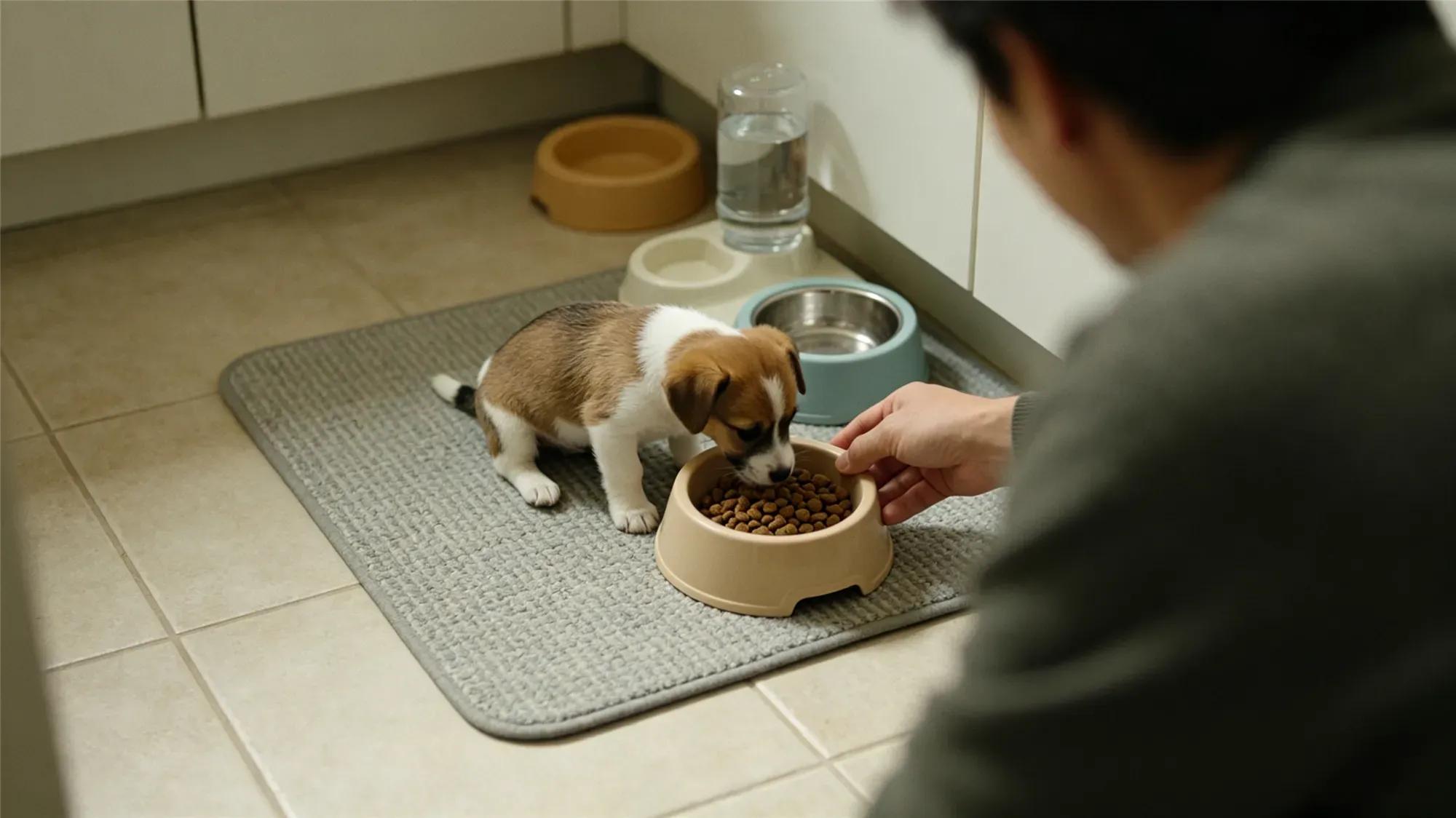
Bringing home an 8-week-old puppy is exciting, but those first few weeks of feeding can feel overwhelming. Your puppy is transitioning from mother’s milk to solid food during one of the most critical developmental windows of their life.
Get it wrong, and you risk stunted growth, digestive issues, or picky eating habits that last a lifetime. Get it right, and you’re setting the foundation for a healthy, thriving adult dog.
This guide covers everything you need to know about feeding 1-2 month old puppies—from portion sizes and scheduling to choosing the right formula for your breed.
Why the 1-2 Month Stage is Critical for Nutrition
Between weeks 8 and 12, your puppy’s digestive system is still developing. Their stomach is tiny—roughly the size of an egg—and can’t handle large volumes of food at once.
During this period:
- They require 22-32% protein content for muscle development
- Energy needs are nearly twice that of an adult dog per pound
- Bone growth accelerates, demanding precise calcium-to-phosphorus ratios
- The immune system is maturing, requiring antioxidant-rich formulas
Creating a Puppy Feeding Schedule That Works
The 4-Meal Rule for 8-Week-Olds
At 8-9 weeks, puppies need frequent, small meals to maintain stable blood sugar. Space feedings every 3-4 hours:
- 7:00 AM – Breakfast (25% of daily intake)
- 11:00 AM – Mid-morning meal (25%)
- 3:00 PM – Afternoon meal (25%)
- 7:00 PM – Dinner (25%)
By 10-12 weeks, you can transition to three meals daily, gradually eliminating the mid-morning feeding.
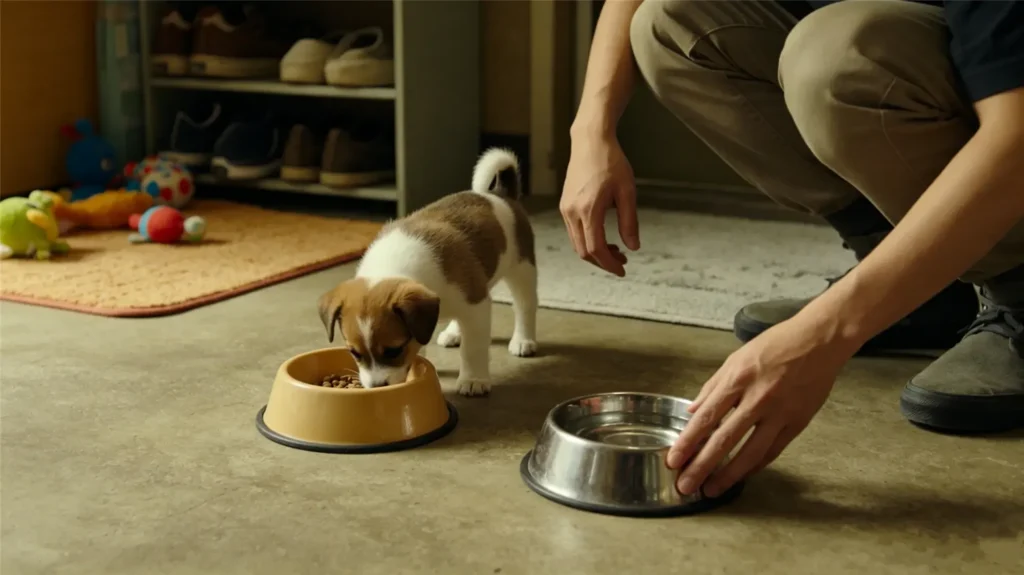
How Much Should You Feed?
Portion size depends on your puppy’s projected adult weight, not their current size. A good rule of thumb:
- Toy breeds (up to 12 lbs adult): 1/4 to 1/2 cup daily
- Small breeds (12-25 lbs): 1/2 to 1 cup daily
- Medium breeds (25-60 lbs): 1 to 2 cups daily
- Large breeds (60+ lbs): 2 to 3 cups daily
Always check your specific puppy food packaging, as caloric density varies by brand. You should be able to feel your puppy’s ribs without pressing hard—if you can’t, reduce portions by 10%.
Wet Food vs. Dry Kibble: What’s Best for 1-2 Month Puppies?
The Soaking Method
Most 8-week-old puppies are still learning to chew properly. Dry kibble can be difficult to digest and may cause choking.
For the first 2-4 weeks:
- Soak dry puppy food in warm water or puppy milk replacer for 10-15 minutes
- Texture should resemble oatmeal—soft but not soupy
- Gradually decrease soaking time as your puppy develops teeth
Choosing the Right Formula
Look for AAFCO-certified puppy formulas specifically labeled for “growth” or “all life stages.” Avoid adult maintenance foods—they lack the caloric density growing puppies need.
Key ingredients to prioritize:
- Named meat proteins (chicken, salmon, lamb) as the first ingredient
- DHA for brain and eye development
- Probiotics for digestive health during the weaning transition
- No artificial colors or fillers like corn gluten meal

Setting Up Your Puppy’s Feeding Station
Bowl Selection Matters
Shallow, wide bowls work best for flat-faced breeds, while deeper stainless steel bowls suit longer muzzles. Avoid plastic— it harbors bacteria and can cause chin acne.
Place the feeding station in a quiet area away from high foot traffic. Puppies are easily distracted; a peaceful environment prevents them from walking away mid-meal.
Picking a stainless steel food bowl that’s right for a puppy
The Water Challenge
While you’re controlling food portions, water should remain available 24/7. However, monitor intake—puppies can over-drink and vomit, or become dehydrated during play sessions.
Signs of proper hydration:
- Gums are pink and moist, not sticky
- Skin snaps back quickly when gently pinched
- Urination occurs every 2-3 hours with pale yellow color
Common Feeding Mistakes to Avoid
Free-Feeding Pitfalls
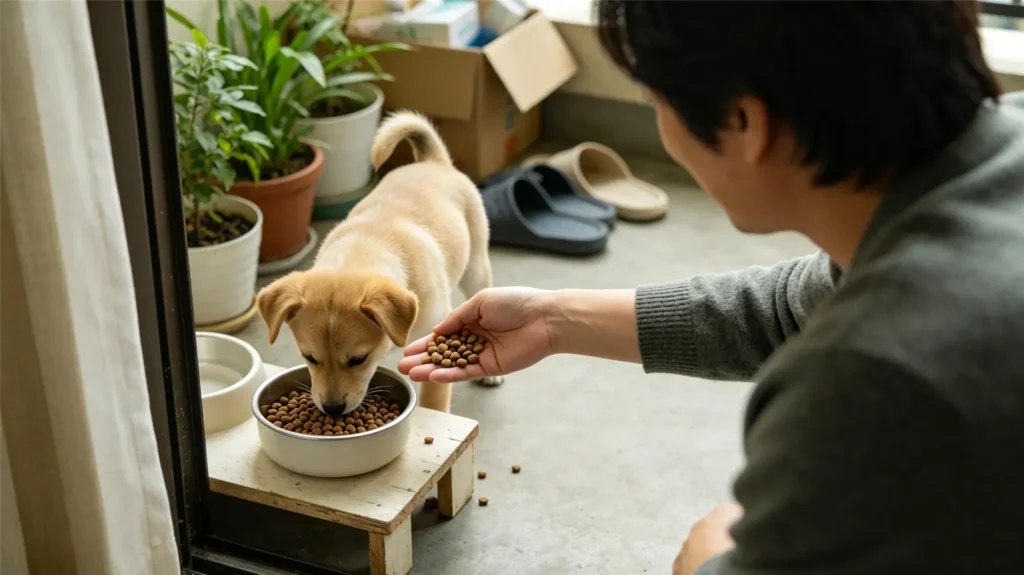
Leaving food out all day seems convenient, but it prevents you from monitoring appetite—a key health indicator. Scheduled meals also make house-training easier, as puppies typically need to eliminate 15-30 minutes after eating.
Human Food Hazards
Those pleading eyes are hard to resist, but many “people foods” are toxic to 1-2 month old puppies:
- Xylitol (in sugar-free gum and peanut butter) – causes liver failure
- Grapes/raisins – kidney toxicity
- Cooked bones – splinter and cause intestinal perforation
- Cow’s milk – lactose intolerance causes diarrhea
Overfeeding and Growth Issues
Chunky puppies aren’t healthy puppies. Overfeeding large breeds can cause hip dysplasia and bone deformities. Follow the body condition score: you should see a slight waistline when viewing from above.
Transitioning to Solid Food: Week-by-Week
Week 8-9: The Adjustment Phase
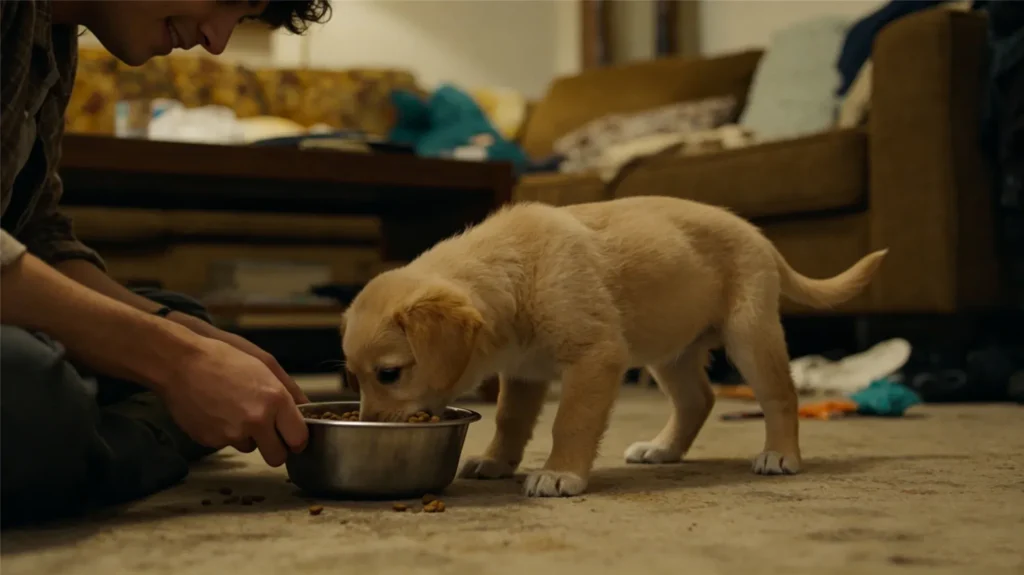
Your puppy has just left their litter. Stress can suppress appetite. If they skip a meal or two, don’t panic. Offer soaked food in a quiet space, and consider warming it slightly to enhance aroma.
Week 10-12: Establishing Routine
By now, your puppy should eagerly anticipate meal times. Begin introducing puzzle feeders or slow-feed bowls if your puppy gulps food too quickly. This prevents bloat and engages their problem-solving instincts.
When to Call the Vet
Contact your veterinarian immediately if you notice:
- No eating for more than 12 hours
- Vomiting after every meal
- Bloated, hard abdomen
- Diarrhea lasting more than 24 hours
- Lethargy combined with loss of appetite
These could indicate parvovirus, intestinal parasites, or food intolerances requiring immediate attention.
Final Thoughts: Patience During the Puppy Phase
Feeding a 1-2 month old puppy requires consistency, observation, and flexibility. Every puppy develops at their own pace—some are ready for dry kibble at 9 weeks, while others need soaked food until 12 weeks.
Keep a feeding journal for the first month. Note portion sizes, eating speed, and stool quality. This data helps your vet assess growth patterns and helps you spot deviations quickly.
Remember, the habits you establish now create the foundation for your dog’s lifelong relationship with food. Invest the time in these early weeks, and you’ll raise a confident eater with a healthy digestive system.