 Free shipping on orders over $75 across the U.S., with different free shipping promotions available in parts of
 Europe,
 South America,
 Australia.For all other countries, please contact us before placing your order, and we'll be happy to fast-track a shipping solution for you.
Reptile Terrarium Setup 101: Step-by-Step Guide to Create a Thriving, Natural Habitat for Beginners
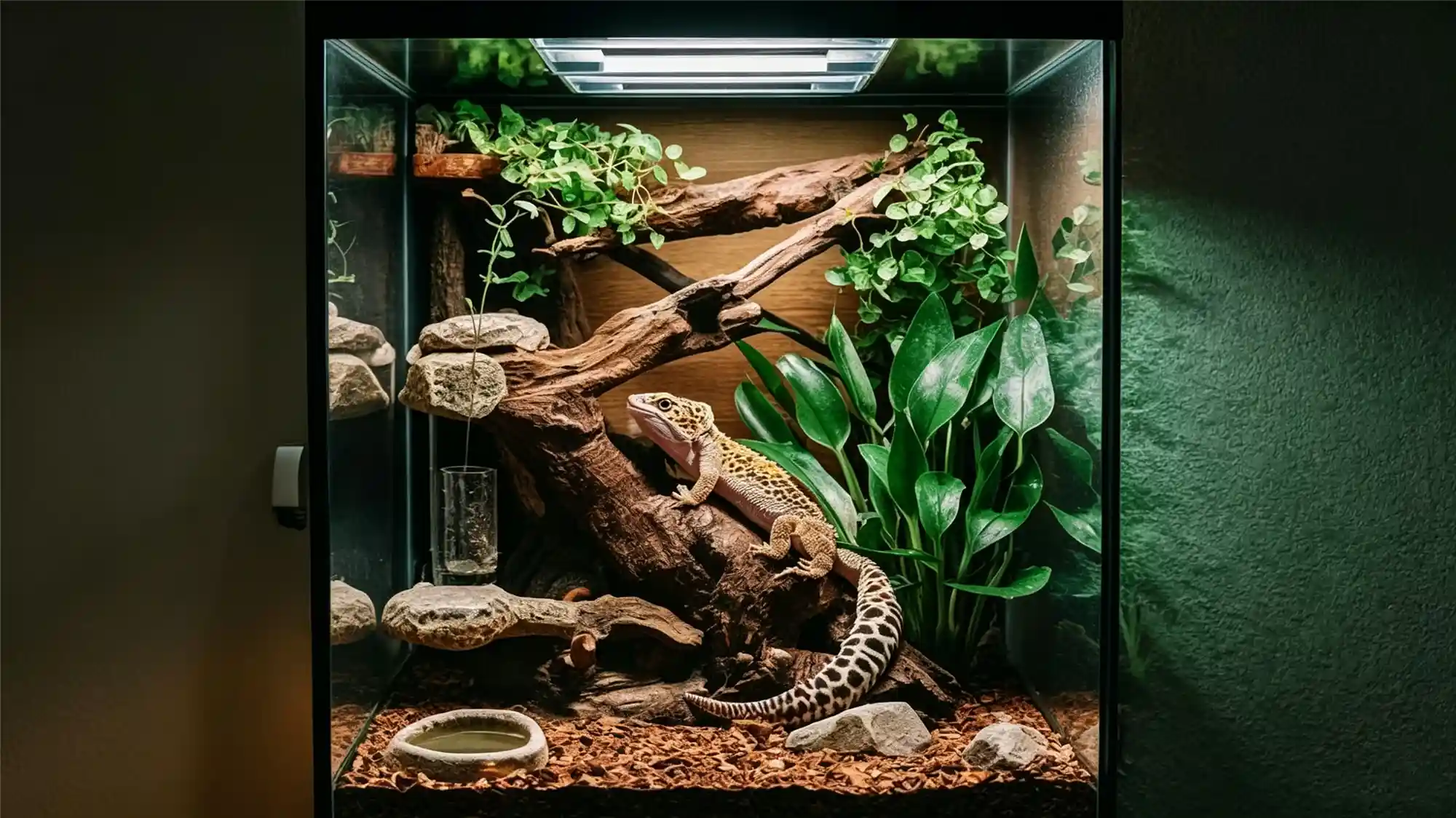
Is your reptile hiding constantly, refusing food, or showing dull colors? The culprit isn’t always illness—it’s often a poorly designed enclosure. After a decade of working with herpetologists and testing hundreds of habitats, I’ve seen how the right reptile terrarium setup transforms stressed captives into active, vibrant companions.
Whether you’re setting up your first leopard gecko tank or upgrading a ball python enclosure, this guide breaks down exactly how to replicate natural environments that promote physical health and psychological well-being.
Why Reptile Enclosure Setup Is Critical for Longevity
Reptiles aren’t decorative objects—they’re complex animals with specific biological needs. A improper reptile habitat setup leads to:
- Chronic stress and weakened immune systems
- Respiratory infections from poor ventilation
- Metabolic bone disease (MBD) due to inadequate UVB lighting
- Dehydration and incomplete shedding cycles
Think of your terrarium as life-support equipment. When configured correctly, it creates a microclimate that allows your pet to thermoregulate, hunt, hide, and exhibit natural behaviors.
The 5 Non-Negotiable Pillars of Reptile Habitat Setup
Before adding decorative elements, master these fundamentals:
1. Space and Dimensions
Bigger is always better. Arboreal species need vertical height (minimum 24″ for chameleons), while terrestrial reptiles require floor space for roaming. As a rule: the enclosure should be at least 1.5 times the snake’s length or 3x the lizard’s length.
2. Thermal Gradients
Your reptile needs a temperature range—not a uniform heat. Create a basking zone (95-105°F for desert species) and a cool zone (75-80°F) so they can self-regulate body temperature.
3. Lighting Spectrum
UVB lighting isn’t optional for most diurnal lizards. It enables vitamin D3 synthesis, preventing MBD. Use a 5.0 or 10.0 UVB bulb depending on species requirements, replaced every 6-12 months.
4. Substrate Selection
Match bedding to biology:
- Desert species: Excavator clay, reptile sand, or stone slate
- Tropical species: Cypress mulch, coconut fiber, or bioactive soil
- Forest dwellers: Orchid bark or sphagnum moss mixes
5. Enrichment & Security
Provide at least two hides (warm and cool), climbing branches, and visual barriers. Reptiles need to feel invisible to reduce cortisol levels.
Species-Specific Reptile Tank Setup Guides
One size never fits all. Here’s how to customize your approach:
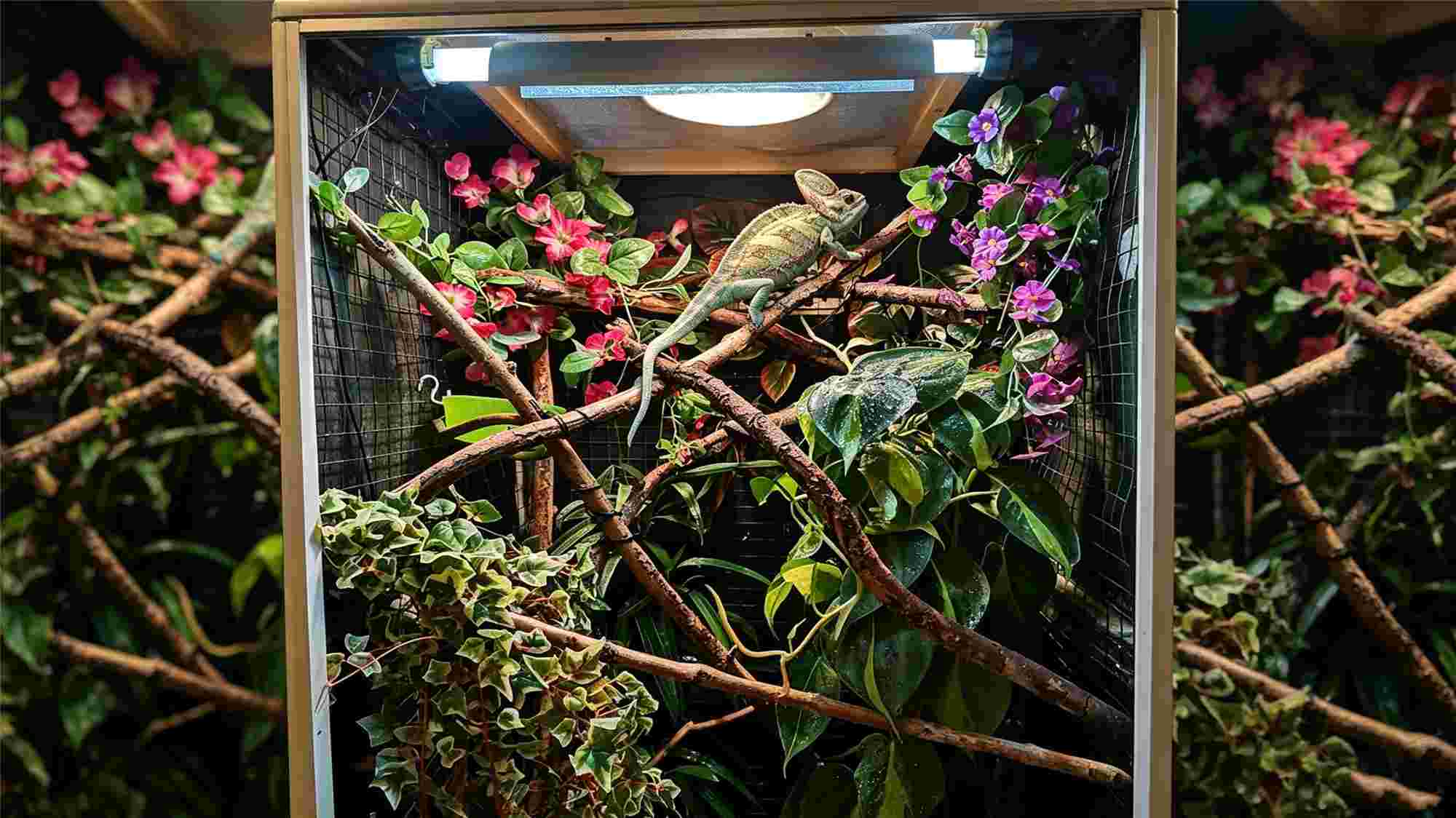
Arboreal & Tropical Species: Chameleons, Crested Geckos
These canopy dwellers require vertically oriented enclosures with dense vegetation. Prioritize:
- Live plants (pothos, ficus, bromeliads) for humidity and cover
- Automated misting systems or dripper bottles
- Screen ventilation to prevent stagnant air
- UVB 5.0 lighting with heat bulbs positioned above basking perches
Desert Dwellers: Leopard Geckos, Bearded Dragons
Arid species need simplicity and heat precision. Focus on:
- Under-tank heaters or ceramic heat emitters for belly heat
- Multiple hides including a humid hide for shedding
- Shallow water dishes to prevent drowning
- Low humidity (20-40%) with proper ventilation
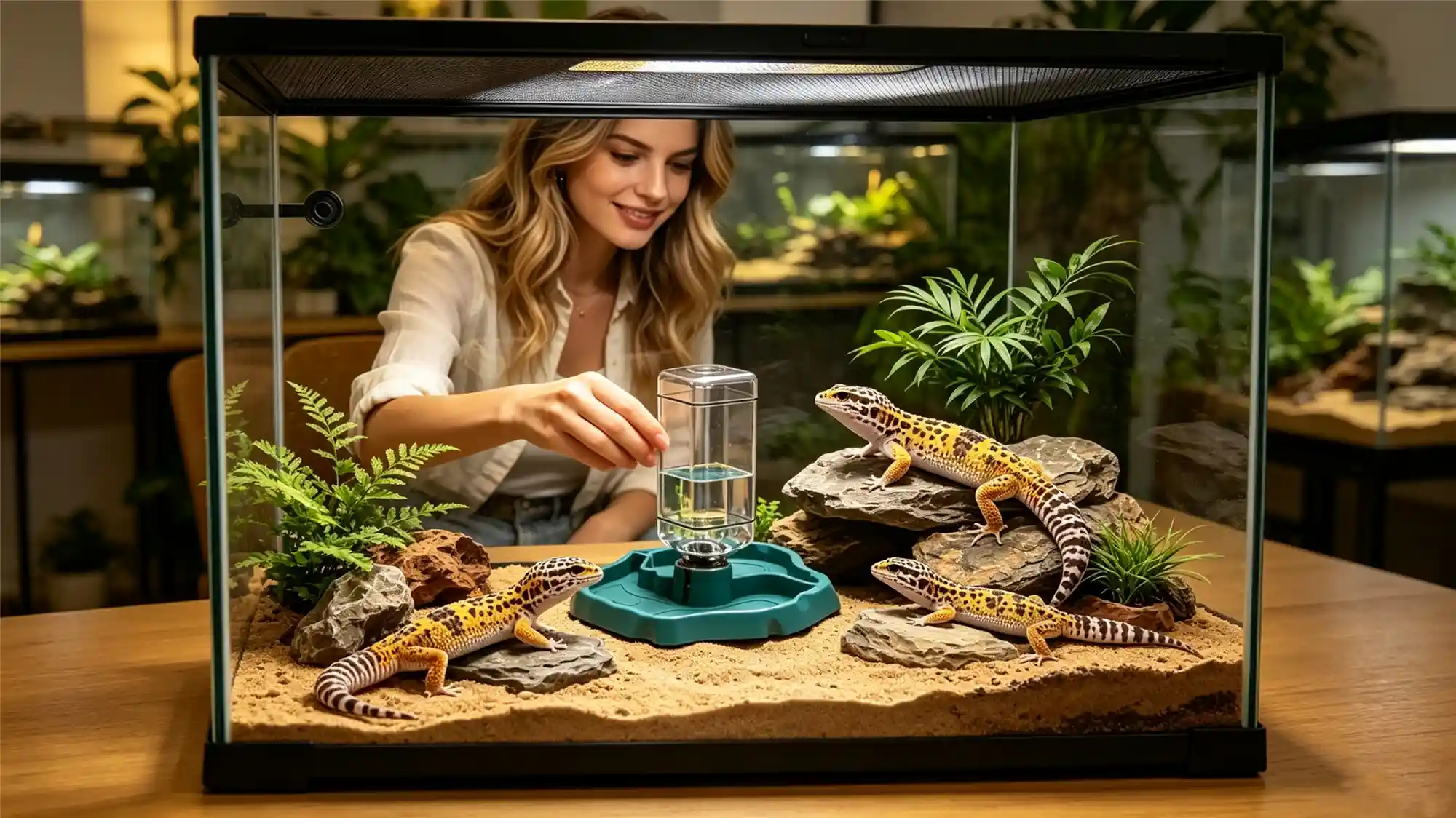
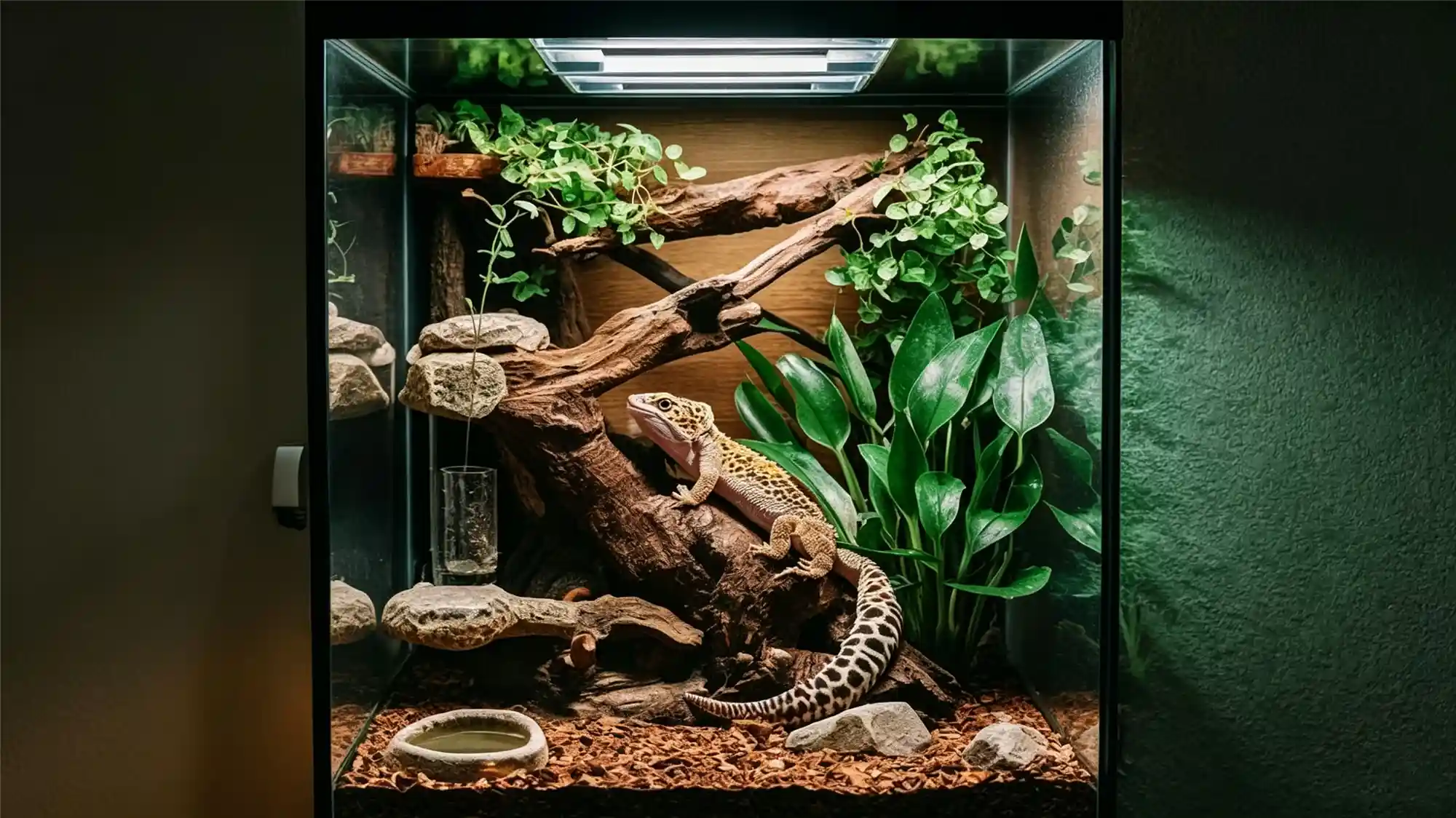
For leopard geckos specifically, avoid loose sand that causes impaction. Use reptile carpet, slate tiles, or excavator clay instead.
Forest & Semi-Arboreal: Ball Pythons, Boa Constrictors
These ambush predators thrive in cluttered, secure environments:
- High humidity (50-70%) maintained with large water bowls and substrate
- Tight hides that touch the snake’s body on all sides
- Branches for climbing (yes, even heavy-bodied snakes climb)
- Low-level UVB optional but beneficial for immune function
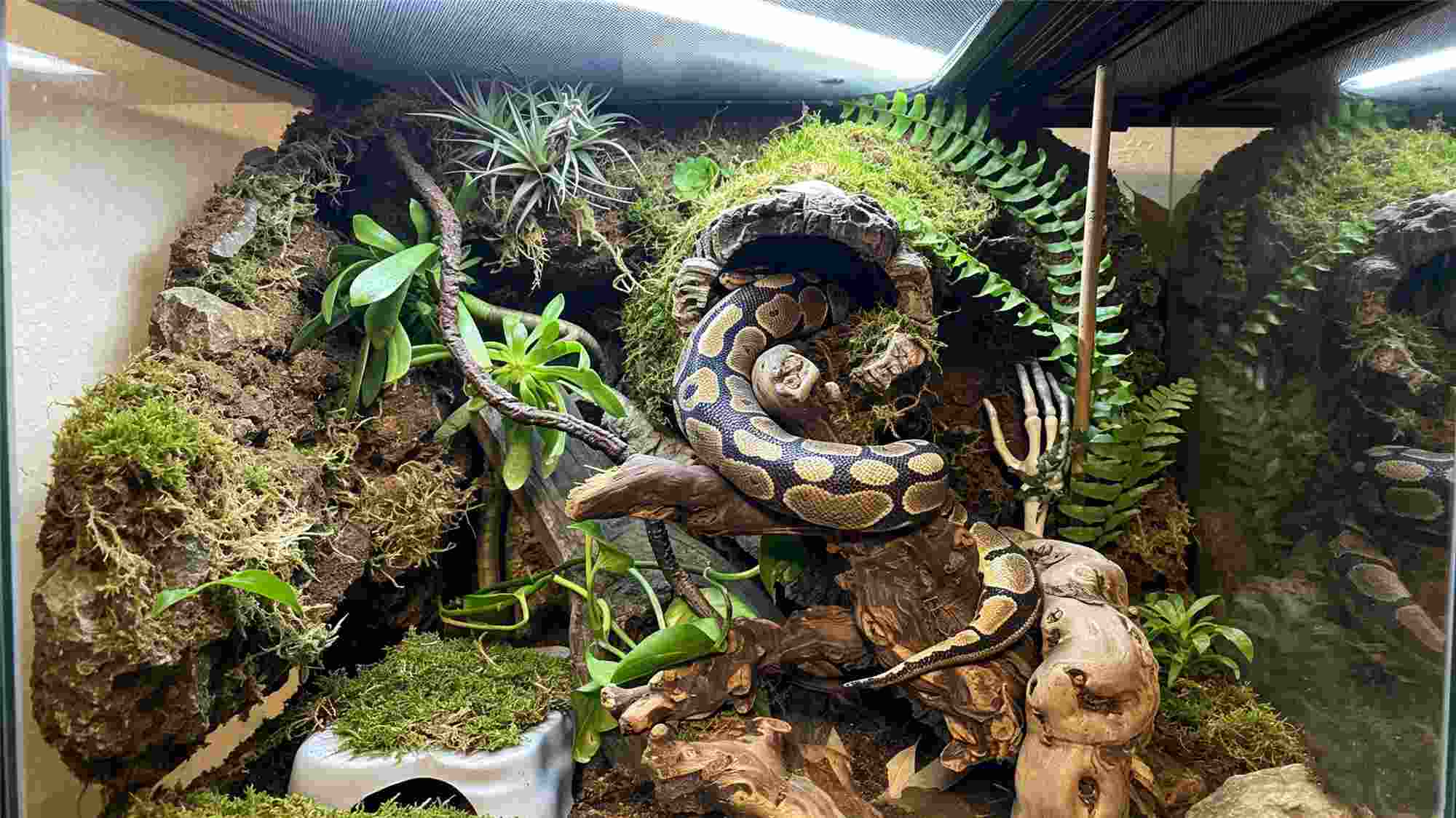
Creative Reptile Enclosure Ideas: Beyond the Basics
Once you’ve mastered the essentials, consider bioactive reptile terrarium setups. These self-sustaining ecosystems use:
- Clean-up crews (isopods, springtails) to break down waste
- Live plants that process nitrates
- Naturalistic hardscapes that encourage exploration
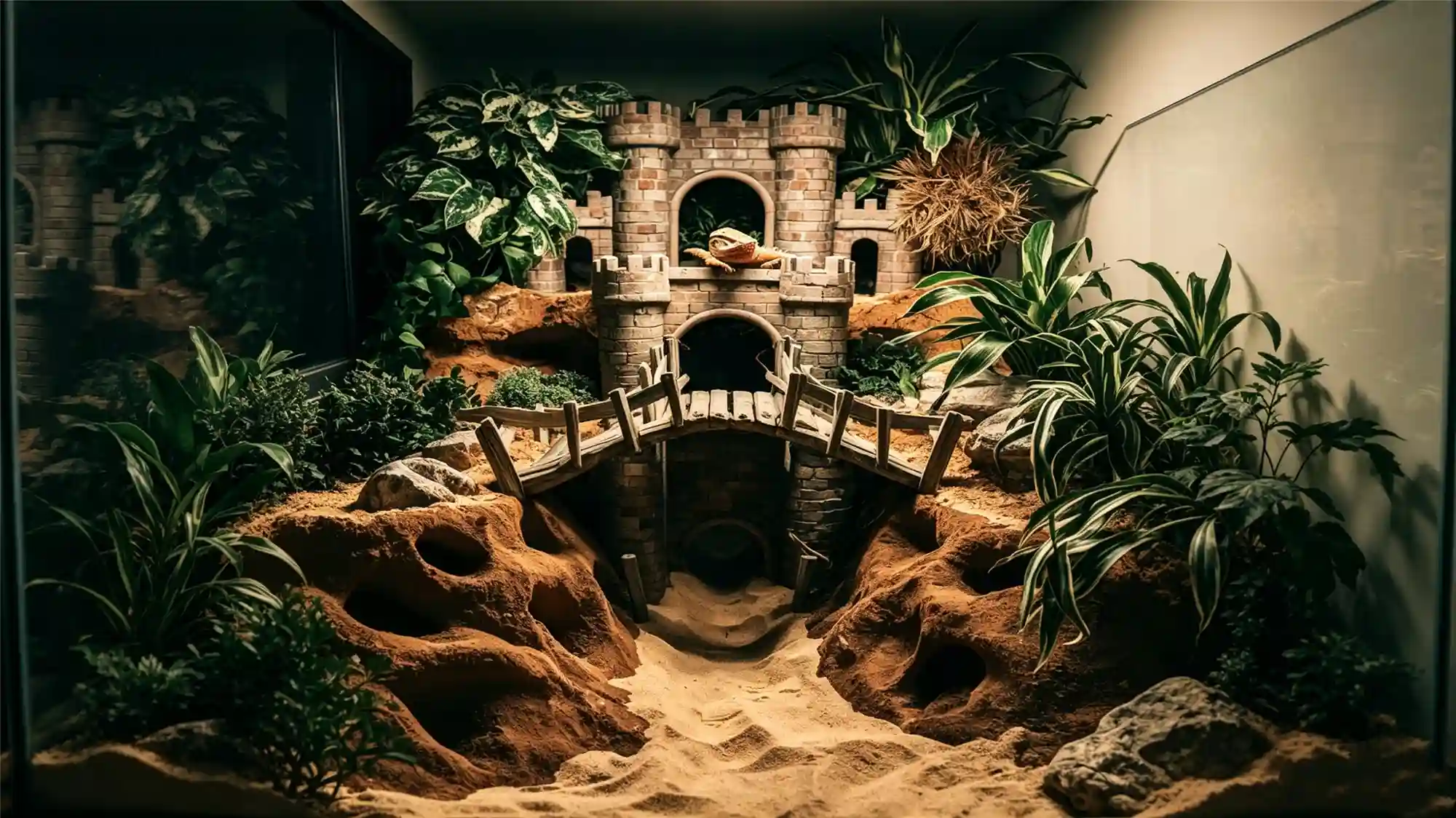
Themed enclosures—like medieval castles or desert canyon replicas—also provide mental stimulation for both you and your pet. Just ensure all decor is reptile-safe (no sharp edges or toxic materials).
Deadly Mistakes to Avoid in Reptile Cage Setup
Even experienced keepers make these errors:
- Heat rocks: Cause severe thermal burns; use overhead heating instead
- All-glass enclosures for chameleons: Poor airflow leads to respiratory infections
- Sand for leopard geckos: High impaction risk; use solid substrates
- Red “night” lights: Disrupt circadian rhythms; reptiles see this light
- Too much open space: Causes stress; fill the enclosure with foliage and hides
FAQ: Reptile Habitat Setup Questions Answered
How often should I clean the enclosure?
Spot-clean daily for feces. Deep clean monthly for non-bioactive setups, replacing substrate and disinfecting decor with reptile-safe cleaners.
Can I use fish tanks for reptiles?
Aquariums work for tropical species needing humidity but lack ventilation for arid species. Always add screen lids and consider front-opening conversions for accessibility.
What’s the best reptile enclosure setup for beginners?
Leopard geckos or corn snakes offer the most forgiving learning curve. Both tolerate beginner mistakes in temperature and humidity while remaining hardy and docile.
Conclusion: Build It Right, Watch Them Thrive
A proper reptile terrarium setup isn’t an expense—it’s an investment in your pet’s 10-20 year lifespan. By matching enclosure parameters to your species’ natural history, you eliminate 90% of common health issues before they start.
Start with the five pillars, choose substrates wisely, and don’t rush the decoration phase. Your reptile will reward you with active hunting behaviors, brilliant colors, and a curious personality that glass-box captives never display.
Ready to upgrade your setup? Check our species-specific enclosure kits that include pre-measured heating and lighting elements to take the guesswork out of reptile care.