 Free shipping on orders over $75 across the U.S., with different free shipping promotions available in parts of
 Europe,
 South America,
 Australia.For all other countries, please contact us before placing your order, and we'll be happy to fast-track a shipping solution for you.
The Ultimate Bearded Dragon Weekly Meal Plan: A Vet-Approved Nutrition Guide for Adult Beardies
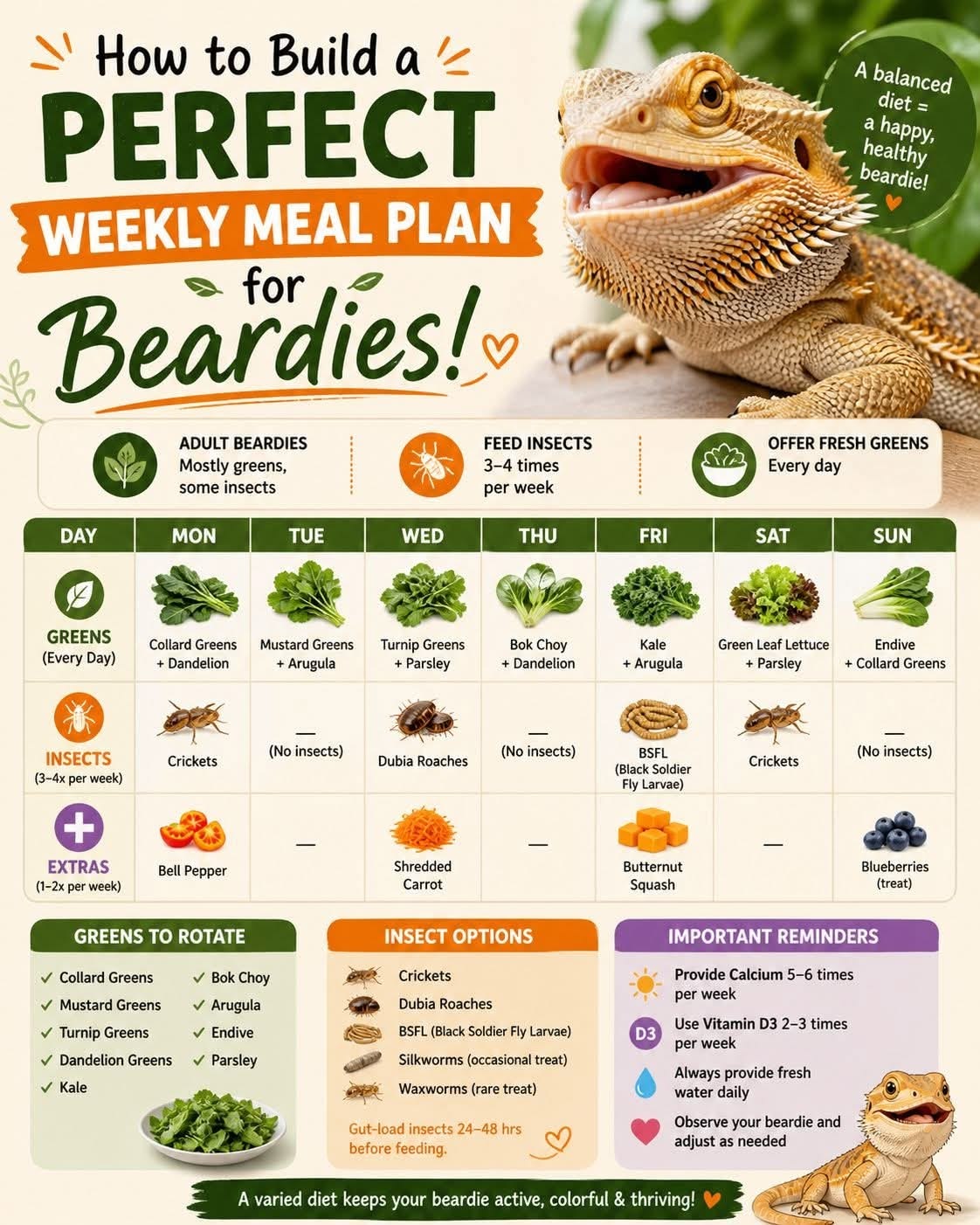
Are you constantly second-guessing whether your adult bearded dragon is getting the right nutrition? You’re not alone. Many reptile owners struggle with the bearded dragon diet transition from protein-heavy juvenile feeding to the plant-based adult regimen. Get it wrong, and you risk obesity, metabolic bone disease, or a lethargic pet.
After consulting with exotic veterinarians and analyzing nutritional data from top herpetological studies, we’ve created the perfect weekly meal plan for bearded dragons that takes the guesswork out of feeding. This isn’t just a food list—it’s a complete nutritional system designed to keep your beardie active, colorful, and thriving for years to come.
Why Adult Bearded Dragons Need a Structured Weekly Diet
Here’s the critical shift most owners miss: adult beardies (12+ months) require 80% greens and only 20% insects. Their wild counterparts forage on fibrous vegetation daily, hunting protein only occasionally. Replicating this bearded dragon nutrition balance prevents fatty liver disease while supporting their slower metabolism.
Without a structured bearded dragon feeding schedule, you might overfeed fatty insects or underfeed calcium-rich greens. Our weekly framework ensures consistent nutrient rotation, preventing dietary boredom and nutritional deficiencies.
The Complete 7-Day Bearded Dragon Meal Plan
This beardie weekly food rotation alternates protein sources and vegetable varieties to maximize nutrient absorption. Print this chart and tape it to your enclosure for easy reference.
Monday: High-Vitamin Start
- Greens: Collard Greens + Dandelion (calcium powerhouses)
- Protein: Crickets (gut-loaded 24 hours prior)
- Extras: Bell Pepper (vitamin C boost)
Tuesday: Vegetarian Reset
- Greens: Mustard Greens + Arugula (peppery flavor stimulates appetite)
- Protein: No insects (digestive rest day)
- Extras: —
Wednesday: Mid-Week Protein
- Greens: Turnip Greens + Parsley
- Protein: Dubia Roaches (superior protein-to-fat ratio)
- Extras: Shredded Carrot (beta-carotene for color vibrancy)
Thursday: Fiber Focus
- Greens: Bok Choy + Dandelion
- Protein: No insects
- Extras: —
Friday: Nutrient-Dense Feeding
- Greens: Kale + Arugula (rotate kale weekly due to goitrogens)
- Protein: BSFL (Black Soldier Fly Larvae) – naturally high in calcium
- Extras: Butternut Squash (easily digestible fiber)
Saturday: Active Day Protein
- Greens: Green Leaf Lettuce + Parsley
- Protein: Crickets (encourages hunting behavior)
- Extras: —
Sunday: Treat & Maintenance
- Greens: Endive + Collard Greens
- Protein: No insects
- Extras: Blueberries (antioxidant-rich occasional treat)
Understanding the Three Pillars of Bearded Dragon Nutrition
Daily Greens: The Foundation (80% of Diet)
Your bearded dragon vegetable list should prioritize calcium-rich, low-oxalate options. The infographic highlights the best staples:
- Collard Greens: The gold standard—2:1 calcium to phosphorus ratio
- Mustard Greens: High in vitamins A, C, and K
- Dandelion Greens: Natural diuretic with liver-supporting properties
- Turnip Greens: Excellent fiber content for digestive health
- Bok Choy: Hydrating and packed with antioxidants
Pro tip: Rotate between 3-4 green types weekly to prevent oxalate buildup from any single source.
Insect Protein: Quality Over Quantity (3-4x Weekly)
Adult beardies only need insects 3-4 times per week. Prioritize these bearded dragon feeder insects:
- Dubia Roaches: 36% protein, easy to digest, quiet
- Black Soldier Fly Larvae (BSFL): Contains 50x more calcium than mealworms—perfect for bearded dragon calcium supplementation
- Crickets: Affordable but must be gut-loaded with carrots and leafy greens 24-48 hours before feeding
- Silkworms: Occasional treat—high in moisture and low in fat
Always gut-load insects 24-48 hours before serving. What your feeders eat becomes what your beardie eats.
Strategic Extras: The 10% Rule (1-2x Weekly)
Vegetables and fruits in this category add micronutrients but shouldn’t exceed 10% of the total diet:
- Butternut Squash: Supports immune function
- Bell Peppers: Color variety encourages picky eaters
- Blueberries: Antioxidant bombs—limit to 2-3 berries as a Sunday treat
- Carrots: Shredded for easy digestion, supports eye health
Critical Supplementation: Avoiding Metabolic Bone Disease
Even the perfect bearded dragon food chart fails without proper supplementation. Adult beardies require:
- Calcium powder (without D3): Dust greens lightly 5-6 times weekly
- Vitamin D3 supplement: 2-3 times weekly to enable calcium absorption
- Multivitamin: Once weekly if not using varied fresh produce
Without D3, your beardie cannot process calcium, leading to soft bones and tremors. Without calcium, metabolic bone disease develops within months.
Common Feeding Mistakes to Avoid
Even well-meaning owners sabotage their bearded dragon nutrition plan with these errors:
- Feeding iceberg lettuce: Zero nutritional value—causes diarrhea
- Daily insect buffets: Leads to obesity and liver stress in adults
- Ignoring hydration: Always provide fresh water daily, even if they rarely drink (they absorb bath water)
- Static diets: Feeding the same three items causes vitamin deficiencies
- Skipping gut-loading: Feeder insects are hollow calories without pre-feeding
Monitoring Your Beardie’s Health
A proper weekly meal plan for bearded dragons should produce these results:
- Bright, alert eyes and active hunting behavior
- Regular bowel movements (every 1-2 days)
- Smooth shedding without retained skin
- Maintained body weight (adults typically 300-600g depending on morph)
If your beardie becomes lethargic, loses appetite for 3+ days, or shows sunken eyes, consult an exotic veterinarian immediately. These signs indicate nutritional deficiencies or impaction.
Conclusion: Commit to the Rotation
Building the perfect bearded dragon weekly meal plan isn’t about perfection—it’s about consistency and variety. By following this 7-day rotation, you’re mimicking the natural foraging patterns that kept these Australian lizards thriving for millennia.
Start with this template, observe your beardie’s preferences, and adjust portions based on activity level. Remember: A varied diet isn’t just nutrition—it’s enrichment that keeps your scaly companion mentally stimulated and physically robust.
Ready to upgrade your beardie’s diet? Save this guide and check your pantry against our greens rotation list. Your bearded dragon’s vibrant colors and energetic basking will thank you.